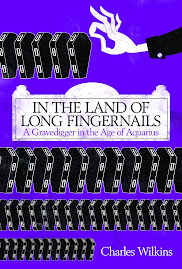
Look out summer of '08. Charles' new book carries the gob smacking title In the Land of Long Fingernails: A Grave Digger in the Age of Aquarius.
Look for an excerpt in this space in January.
Charles' social history of Confederation College will be released soon as a web publication. Stay tuned here for info on the first installment.
LAUNCH of Schoolmarm, Penny Petrone’s memoir of her 49-year teaching career. Sunday, Dec. 9, 2-3 p.m. at the Thunder Bay Museum. a reading by Deborah deBakker, remarks by Charles Wilkins, and greetings from the City of Thunder Bay by Aldo Ruberto. Penny completed this manuscript shortly before her death in August, 2005
Saturday, November 24, 2007


Thursday, November 22, 2007
Giller Prize Draw
Win the Giller prize novel, Late Nights on Air by Elizabeth Hay. The book is #1 on the "Globe and Mail" best seller list and it’s a swell read! To enter, send in the title of your favourite work of Canadian fiction – novel or short story. All replies will be posted. The draw takes place on December 20, 2007. Use the link below or send your pick to joanbaril@gmail.com. The winner will be informed by e-mail.
NEVER UNDERESTIMATE THE POWER OF DENIAL
Creative non-fiction by Peggy Lauzon
Linda and I sit in the grey room on the grey plastic chairs. Styrofoam heads stare out from one shelf-lined wall, some sporting hair pieces, some not. I could borrow a wig once treatment begins, so I try to imagine wearing one of these. I arch an eyebrow at Linda. She shakes her head no.
A heavy black binder labelled “Chemotherapy Handbook” waits on the coffee table, too close to my left knee. Ursula comes in and places herself across from us. She has a kind face and white-streaked hair tied back in a bun. She is very direct.Ursula describes different breast cancer treatment options. In addition to intravenous chemotherapy drugs, one branch of a clinical trial involves receiving a needle, sometimes two, each day for the support drugs that are used to minimize chemo side effects. She shows me the schedule, but six months is a long time to count.
“How many needles is that altogether?”
Ursula gives me an odd look. “Nobody’s ever asked me that before. I’ll have to figure it out for you. Anyway, there will be other needles. You’ll need routine blood work. Maybe IV antibiotics.”
“I don’t want to have to come to the hospital every day. I want my life to be as normal as possible.”
“You could learn to give yourself some of the needles.” Ursula presses on through the silence. “You might not be feeling well. You might want to be near the hospital.”
The chemo drug names sound foreign to me: Epirubicin, Cyclophosphimide, Taxol. Epirubicin is bright red. The IV needle for this has to be very long, so that the drug can’t back up and touch my skin.
“Epirubicin will burn your skin. No, worse than burn. It will necrotize your flesh and you’ll need a skin graft if a drop touches it. Isn’t it funny how a drug that can hurt you on the outside won’t hurt you on the inside?”
Ursula goes through the drill.
Cyclophosphimide makes you very sun sensitive. Stay covered up. Nausea, another side effect, is more controllable these days. Take your meds. Monitor weight loss. The main thing is that your body’s cells are being destroyed. Take your temperature daily and watch for signs of infection. Almost everything poses a danger: bug bites, manicures, kids coming home from school with the sniffles. Even facial scrubs can do damage that your body won’t be able to heal.
Facial scrubs?
I scan the shelves, looking at the mostly grey wigs. People my age aren’t supposed to get cancer. . . .
While Ursula keeps talking, Linda squeezes my hand, and I shake my head to feel my bouncy red curls, thinking that it would be nice to still have something swingy and dangly around my face. Earrings, perhaps?
The room has become quiet and I see that Ursula is waiting for me to say something.
“Would it be a good idea if I got my ears pierced?” I ask.
“No,” Ursula pauses. “No, Peggy, that would be a really, really bad idea.”
Linda and I sit in the grey room on the grey plastic chairs. Styrofoam heads stare out from one shelf-lined wall, some sporting hair pieces, some not. I could borrow a wig once treatment begins, so I try to imagine wearing one of these. I arch an eyebrow at Linda. She shakes her head no.
A heavy black binder labelled “Chemotherapy Handbook” waits on the coffee table, too close to my left knee. Ursula comes in and places herself across from us. She has a kind face and white-streaked hair tied back in a bun. She is very direct.Ursula describes different breast cancer treatment options. In addition to intravenous chemotherapy drugs, one branch of a clinical trial involves receiving a needle, sometimes two, each day for the support drugs that are used to minimize chemo side effects. She shows me the schedule, but six months is a long time to count.
“How many needles is that altogether?”
Ursula gives me an odd look. “Nobody’s ever asked me that before. I’ll have to figure it out for you. Anyway, there will be other needles. You’ll need routine blood work. Maybe IV antibiotics.”
“I don’t want to have to come to the hospital every day. I want my life to be as normal as possible.”
“You could learn to give yourself some of the needles.” Ursula presses on through the silence. “You might not be feeling well. You might want to be near the hospital.”
The chemo drug names sound foreign to me: Epirubicin, Cyclophosphimide, Taxol. Epirubicin is bright red. The IV needle for this has to be very long, so that the drug can’t back up and touch my skin.
“Epirubicin will burn your skin. No, worse than burn. It will necrotize your flesh and you’ll need a skin graft if a drop touches it. Isn’t it funny how a drug that can hurt you on the outside won’t hurt you on the inside?”
Ursula goes through the drill.
Cyclophosphimide makes you very sun sensitive. Stay covered up. Nausea, another side effect, is more controllable these days. Take your meds. Monitor weight loss. The main thing is that your body’s cells are being destroyed. Take your temperature daily and watch for signs of infection. Almost everything poses a danger: bug bites, manicures, kids coming home from school with the sniffles. Even facial scrubs can do damage that your body won’t be able to heal.
Facial scrubs?
I scan the shelves, looking at the mostly grey wigs. People my age aren’t supposed to get cancer. . . .
While Ursula keeps talking, Linda squeezes my hand, and I shake my head to feel my bouncy red curls, thinking that it would be nice to still have something swingy and dangly around my face. Earrings, perhaps?
The room has become quiet and I see that Ursula is waiting for me to say something.
“Would it be a good idea if I got my ears pierced?” I ask.
“No,” Ursula pauses. “No, Peggy, that would be a really, really bad idea.”
Monday, November 19, 2007
GIVE A BOOK FOR CHRISTMAS
A melange of suggestions by local writers Jane Crossman, Glenn Ponka, Nancy Bjorgo, Jackie D'Acre, Sue Blott.
Any book by Alexander McCall Smith especially the Isabel Dalhousie books and the Number One Ladies Detective Agency series.
The Kite Runner by Khaled Hosseini.
Garrison Keeler's Lake Wobegon USA.
The never out of print Who Has Seen the Wind by W.O. Mitchell and The Stone Diaries by the incomparable Carol Shields
The novels of Philip Caputo but also his 10,000 Days of Thunder: A History of the Vietnam War
The best of Elizabeth Hay, A Student of Weather and the 2007 Giller winner Late Nights on Air - both wonderful.
The World Without Us by Alen Weisman. A look at what would happen on earth if everyone here disappeared.
For Thunder Bayites who live away but still keep in touch Life in a Thundering Bay: Voices from Thunder Bay's Past a compilation of historical writings edited by Tania L/ Saj and Elle Andra-Warner (available at the Northern Women's Book Store) For the cookbook fan Flavours of Northwestern Ontario by Tim Matthews (available at the Con College book store) and for the under 8 set, The Boy From the Sun by Duncan Weller (available at the Finnish Book Store). For the whodunnit reader Stalin's Ghost by Martin Cruz Smith. Inspector Renko investigates mysterious sightings of the long dead Russian dictator at a Moscow metro station. (available at Chapters)
My book selection is Everything is Illuminated by Jonathan Safran Foer. It is a book where many things either do or do not happen, where one of the main characters is named Jonathan Safran Foer (but who isn't the author), where the future is described as being only a paper thin distance away but still we don't have the strength to turn the page. It is about the Holocaust, about a blind dog named Sammy Davis Junior, about a tour guide with outrageously butchered English, among many other things. It is heart stopping and beautiful and funny and sad and completely original.Two thumbs up says Peggy Lauzon
Any book by Alexander McCall Smith especially the Isabel Dalhousie books and the Number One Ladies Detective Agency series.
The Kite Runner by Khaled Hosseini.
Garrison Keeler's Lake Wobegon USA.
The never out of print Who Has Seen the Wind by W.O. Mitchell and The Stone Diaries by the incomparable Carol Shields
The novels of Philip Caputo but also his 10,000 Days of Thunder: A History of the Vietnam War
The best of Elizabeth Hay, A Student of Weather and the 2007 Giller winner Late Nights on Air - both wonderful.
The World Without Us by Alen Weisman. A look at what would happen on earth if everyone here disappeared.
For Thunder Bayites who live away but still keep in touch Life in a Thundering Bay: Voices from Thunder Bay's Past a compilation of historical writings edited by Tania L/ Saj and Elle Andra-Warner (available at the Northern Women's Book Store) For the cookbook fan Flavours of Northwestern Ontario by Tim Matthews (available at the Con College book store) and for the under 8 set, The Boy From the Sun by Duncan Weller (available at the Finnish Book Store). For the whodunnit reader Stalin's Ghost by Martin Cruz Smith. Inspector Renko investigates mysterious sightings of the long dead Russian dictator at a Moscow metro station. (available at Chapters)
My book selection is Everything is Illuminated by Jonathan Safran Foer. It is a book where many things either do or do not happen, where one of the main characters is named Jonathan Safran Foer (but who isn't the author), where the future is described as being only a paper thin distance away but still we don't have the strength to turn the page. It is about the Holocaust, about a blind dog named Sammy Davis Junior, about a tour guide with outrageously butchered English, among many other things. It is heart stopping and beautiful and funny and sad and completely original.Two thumbs up says Peggy Lauzon
Thursday, November 15, 2007
WHAT'S UP
GOVERNOR GENERAL’S AWARDS Tuesday, November 27 at 10 a.m.
Tree of Smoke by Denis Johnson won the prestigious American National Book Award for fiction. The novel deals with the Vietnam War. The non-fiction winner was Legacy of Ashes: the History of the CIA by Tim Weiner. Robert Haas picked up the prize for poetry for Time and Materials. His poems include many critical of the war in Iraq. It would seem the American reading pubic is focused on the lengthy list of its country’s international blunders.
A THUNDER BAY CHRISTMAS GIFT BOOK. For your friends who cook or who like to brouse beautiful cook books, my pick is Flavours of Northwestern Ontario by Tim Matthews. The recipes are healthy and delicious, the photography by Murray Metcalf superb - the cover shot alone is worth the price. Only available (as far as I know) at the Confederation College Bookstore.
BOOK RAGE??? According to the “New York Times” a form of book rage is sweeping Canada. This malady is characterized by “angry outbursts in bookstores and more specifically, by the hurling of books,” says the Times. The reason? The variation between the US and Canadian price. The good news - Wal-Mart will be selling books at the American price; however, their selection is limited. Heather of Chapters has announced massive markdowns and sales. Just in time for Christmas shopping, but watch out for those flying volumes.
What are you reading? We'll post your pick. Hit the link below or send to joanbaril@gmail.com
Tree of Smoke by Denis Johnson won the prestigious American National Book Award for fiction. The novel deals with the Vietnam War. The non-fiction winner was Legacy of Ashes: the History of the CIA by Tim Weiner. Robert Haas picked up the prize for poetry for Time and Materials. His poems include many critical of the war in Iraq. It would seem the American reading pubic is focused on the lengthy list of its country’s international blunders.
A THUNDER BAY CHRISTMAS GIFT BOOK. For your friends who cook or who like to brouse beautiful cook books, my pick is Flavours of Northwestern Ontario by Tim Matthews. The recipes are healthy and delicious, the photography by Murray Metcalf superb - the cover shot alone is worth the price. Only available (as far as I know) at the Confederation College Bookstore.
BOOK RAGE??? According to the “New York Times” a form of book rage is sweeping Canada. This malady is characterized by “angry outbursts in bookstores and more specifically, by the hurling of books,” says the Times. The reason? The variation between the US and Canadian price. The good news - Wal-Mart will be selling books at the American price; however, their selection is limited. Heather of Chapters has announced massive markdowns and sales. Just in time for Christmas shopping, but watch out for those flying volumes.
What are you reading? We'll post your pick. Hit the link below or send to joanbaril@gmail.com
Sunday, November 11, 2007
DARWIN'S GAME. - FIRST CHAPTER, CYBERPUNK NOVEL by TED FRYIA
DARWIN'S GAME by TED FRYIA is a near-future (cyberpunk) novel taking place in Toronto, where 'cyberheads' are being killed and their brains plundered. With matrix-mating chips embedded throughout his brain and coaxial implants in his fingertips, a cybernaut by the name of Eugene Muck, is drawn into the mystery. Muck is led to his one-time mentor and a plan where the accelerated evolution of cyberspace threatens the existence of the physical world.
CHAPTER -- 1
Brick, darkened from the tired and toxic breath of the city, sucked up what little light slipped into the alley from Yonge Street. Rusted metal fire escapes looked down like spiders, contracted, ready to pounce while raindrops tapped-danced off Stella’s shoulders. Shadows slouched against walls and slid into puddles that drooled across the pebble laden asphalt. Iron gates stood guard in doorways, daring entrance.
Stella’s vinyl rain jacket flapped, unfastened. It gave her quick access to the grip of the antique Browning 12 gauge shotgun held inside by tear-away straps. The sawed-off barrel bounced off her left thigh and was responsible for the fist-sized bruise. She’d tried to carry it on the right side but found she couldn’t locate the grip to tear away and level it quickly enough.
She’d only discharged the weapon three times. The first, a warning shot to three would-be muggers in the stairwell of her apartment building. Another time she’d spread number three shot across the toes of a group of skinheads who wouldn’t let her pass. Most recently she’d been forced to unload into the belly of a dealer of cybertrash in an alley much like this one. When the dealer tried to cave the side of her head in with a metal bar, she halted his backswing with a blast from a single barrel.
“Psst – psst - hey’re you Stella?” A tall sillouette pushed a long shadow down the alley as it moved out from the wall.
Stella stopped, reached inside her coat and rested her hand on the grip of the Browning. “I am. You the one with the tracing virus? You Bobby Basic?”
“Yeah.”
“Got what we agreed on?”
Bobby Basic patted his side pocket. “Downloaded on this chip.”
“How do I know it’s authentic? Where’d you get it?”
“Never mind, where I got it. You’ll have to take my word that it’s authentic.”
“Why should I do that?” asked Stella.
“Because, distrust is no way to cultivate a business relationship. And while I’ve got nothin’ against vintaged women,”said Bobby, pointing limply to where Stella’s hand was hidden under her coat, “I’m having second thoughts about getting involved with a woman carrying loneliness in her eyes and buckshot in her hands.”
“How would you know what I have under here?”
“I make it my business to know my customers. And a middle aged woman totin’ an antique blaster doesn’t go unnoticed ‘round these streets.”
There was movement behind Bobby. It was subtle, fluid-like and it ducked into a doorway. “We were to meet alone,” Stella said.
Bobby’s voice was accusing. “That’s what I thought. Who’d you bring?”
Before Stella could answer, shadows moved from behind Bobby and converged on him like a sea of carbon coloured waves. Stella froze. She felt light-headed all of a sudden, her vision swirled then clouded. Her knees buckled and she was dumped onto the damp gravel-strewn asphalt as Bobby fell quietly among a pool of darkness.
Cold wet asphalt felt rough against her cheek. She struggled to her feet, not knowing how long she’d been out or what she’d find when she went to Bobby. He had collapsed with his knees folded under him, lying backwards over his heels, his pelvis thrust upwards.
She approached. Her soft-soled shoes kicked loose pieces of gravel into puddles, sending small ripples through reflected fragments of light. When she got to Bobby, she could see his hairline was no more. She thought it a trick at first; his skull had been cut and opened like the top of a can. It was empty! His body was intact, except for his flip-top head, no sign of a brain. But where was the blood?
A chill burrowed into her bones. She shivered, knowing she couldn’t be caught in this position with this dealer, in this place. Just being with this man, with the software he had, would be more than enough reason for local police or Intelligence International to haul her in. Trafficking in illegal software had been upgraded to a capital crime. And add in the lifeless, brainless body of Bobby Basic, and Percy might be waiting for her on their couch a long time.
Stella looked in both directions down the alley, reached down and checked Bobby’s pockets. She found the smuggle tube she’d come after. Pulling at the neck of her sweater Stella slipped it into her bra. Another quick look around. She pulled her coat tightly around herself and stepped over the gaping head of Bobby Basic, towards the end of the alley.
The meeting had been set up so that subway access was not far away. Only now did she realize how good a plan it was.
Ted Fryia went to school, worked and lived in Thunder Bay for a total of 11 years. His older son was born in Port Arthur General and he and his two sons were educated at Lakehead University. His younger son still lives in Thunder Bay.
CHAPTER -- 1
Brick, darkened from the tired and toxic breath of the city, sucked up what little light slipped into the alley from Yonge Street. Rusted metal fire escapes looked down like spiders, contracted, ready to pounce while raindrops tapped-danced off Stella’s shoulders. Shadows slouched against walls and slid into puddles that drooled across the pebble laden asphalt. Iron gates stood guard in doorways, daring entrance.
Stella’s vinyl rain jacket flapped, unfastened. It gave her quick access to the grip of the antique Browning 12 gauge shotgun held inside by tear-away straps. The sawed-off barrel bounced off her left thigh and was responsible for the fist-sized bruise. She’d tried to carry it on the right side but found she couldn’t locate the grip to tear away and level it quickly enough.
She’d only discharged the weapon three times. The first, a warning shot to three would-be muggers in the stairwell of her apartment building. Another time she’d spread number three shot across the toes of a group of skinheads who wouldn’t let her pass. Most recently she’d been forced to unload into the belly of a dealer of cybertrash in an alley much like this one. When the dealer tried to cave the side of her head in with a metal bar, she halted his backswing with a blast from a single barrel.
“Psst – psst - hey’re you Stella?” A tall sillouette pushed a long shadow down the alley as it moved out from the wall.
Stella stopped, reached inside her coat and rested her hand on the grip of the Browning. “I am. You the one with the tracing virus? You Bobby Basic?”
“Yeah.”
“Got what we agreed on?”
Bobby Basic patted his side pocket. “Downloaded on this chip.”
“How do I know it’s authentic? Where’d you get it?”
“Never mind, where I got it. You’ll have to take my word that it’s authentic.”
“Why should I do that?” asked Stella.
“Because, distrust is no way to cultivate a business relationship. And while I’ve got nothin’ against vintaged women,”said Bobby, pointing limply to where Stella’s hand was hidden under her coat, “I’m having second thoughts about getting involved with a woman carrying loneliness in her eyes and buckshot in her hands.”
“How would you know what I have under here?”
“I make it my business to know my customers. And a middle aged woman totin’ an antique blaster doesn’t go unnoticed ‘round these streets.”
There was movement behind Bobby. It was subtle, fluid-like and it ducked into a doorway. “We were to meet alone,” Stella said.
Bobby’s voice was accusing. “That’s what I thought. Who’d you bring?”
Before Stella could answer, shadows moved from behind Bobby and converged on him like a sea of carbon coloured waves. Stella froze. She felt light-headed all of a sudden, her vision swirled then clouded. Her knees buckled and she was dumped onto the damp gravel-strewn asphalt as Bobby fell quietly among a pool of darkness.
Cold wet asphalt felt rough against her cheek. She struggled to her feet, not knowing how long she’d been out or what she’d find when she went to Bobby. He had collapsed with his knees folded under him, lying backwards over his heels, his pelvis thrust upwards.
She approached. Her soft-soled shoes kicked loose pieces of gravel into puddles, sending small ripples through reflected fragments of light. When she got to Bobby, she could see his hairline was no more. She thought it a trick at first; his skull had been cut and opened like the top of a can. It was empty! His body was intact, except for his flip-top head, no sign of a brain. But where was the blood?
A chill burrowed into her bones. She shivered, knowing she couldn’t be caught in this position with this dealer, in this place. Just being with this man, with the software he had, would be more than enough reason for local police or Intelligence International to haul her in. Trafficking in illegal software had been upgraded to a capital crime. And add in the lifeless, brainless body of Bobby Basic, and Percy might be waiting for her on their couch a long time.
Stella looked in both directions down the alley, reached down and checked Bobby’s pockets. She found the smuggle tube she’d come after. Pulling at the neck of her sweater Stella slipped it into her bra. Another quick look around. She pulled her coat tightly around herself and stepped over the gaping head of Bobby Basic, towards the end of the alley.
The meeting had been set up so that subway access was not far away. Only now did she realize how good a plan it was.
Ted Fryia went to school, worked and lived in Thunder Bay for a total of 11 years. His older son was born in Port Arthur General and he and his two sons were educated at Lakehead University. His younger son still lives in Thunder Bay.
Friday, November 9, 2007
WHAT ARE WE READING???
Gwen O’Reilly from the Northern Women’s Centre writes: Lullabies for Little Criminals was amazing. A powerful story, not a whiff of sentimentality, still managing to portray both the despair and resiliency of a remarkable, ordinary child. This book is up for the G.G.
Gwen described Turtle Valley by Gail Anderson Dargatz as not bad, a bit of a ghost story. Not as good as Cure for Death by Lightening, but the story of that family is continued in this book.
Glen Ponka, local writer and science fiction buff gave 4 stars to Rock Jaw Master of the Eastern Border (Bone, Book 5) by Jeff Smith He gave 5 stars to Rose by the same author. Smith seems to be a favoured author. Glen liked both Treasure Hunter and Ghost Circles and several others by the same writer. All are four star books, he says.
Margaret Phillips of The Northern Women’s Bookstore loved the winner of the Giller, Late Nights on Air by Elizabeth Hay. "One of my best reads this year." We learn the stories of six people who work at a radio station in the Yellowknife. “Highly recommended.” You can pickup the entire list of Margaret’recommendations at the book store.
Ulrich Wendt, the Winnipeg poet and former Thunder Bay resident, says none of his books are current. “The one I'm reading now is The End of Faith by Sam Harris. It's in the same league as the Hitchens book, (God is not Great: How Religion Poisons Everything by Christopher Hitchens) an attack on organized religion and on irrational belief. I’m also reading "Now You Care" poems by Di Brandt. She's wonderful. If you Google her name, you can hear her reading one of her poems.
I’m finishing up Cheating at Canasta by the great Irish short story writer, William Trevor. Some say Trevor is the best short story writer in English today; others claim the crown for or own great Alice M. Is one better than the other?? Hard to say as they differ stylistically and explore different subject matter. Or do they? The title story reminded me of Alice’s story, “The Bear Went over the Mountain” which was made into a marvellous movie, Away from You.
I lvoe to get posts about what people are reading. Leave a comment.
Gwen described Turtle Valley by Gail Anderson Dargatz as not bad, a bit of a ghost story. Not as good as Cure for Death by Lightening, but the story of that family is continued in this book.
Glen Ponka, local writer and science fiction buff gave 4 stars to Rock Jaw Master of the Eastern Border (Bone, Book 5) by Jeff Smith He gave 5 stars to Rose by the same author. Smith seems to be a favoured author. Glen liked both Treasure Hunter and Ghost Circles and several others by the same writer. All are four star books, he says.
Margaret Phillips of The Northern Women’s Bookstore loved the winner of the Giller, Late Nights on Air by Elizabeth Hay. "One of my best reads this year." We learn the stories of six people who work at a radio station in the Yellowknife. “Highly recommended.” You can pickup the entire list of Margaret’recommendations at the book store.
Ulrich Wendt, the Winnipeg poet and former Thunder Bay resident, says none of his books are current. “The one I'm reading now is The End of Faith by Sam Harris. It's in the same league as the Hitchens book, (God is not Great: How Religion Poisons Everything by Christopher Hitchens) an attack on organized religion and on irrational belief. I’m also reading "Now You Care" poems by Di Brandt. She's wonderful. If you Google her name, you can hear her reading one of her poems.
I’m finishing up Cheating at Canasta by the great Irish short story writer, William Trevor. Some say Trevor is the best short story writer in English today; others claim the crown for or own great Alice M. Is one better than the other?? Hard to say as they differ stylistically and explore different subject matter. Or do they? The title story reminded me of Alice’s story, “The Bear Went over the Mountain” which was made into a marvellous movie, Away from You.
I lvoe to get posts about what people are reading. Leave a comment.
Sunday, November 4, 2007
THE GG
The GG. Winners of the Governor General’s Award will be announced on Tuesday, November 27. In the running for fiction are: David Chariandy for Soucouyant; Barbara Gowdy for Helpless; Michael Ondaatje for Divisadero; Heather O’Neill, for Lullabies for Little Criminals and M.G.Vassanji for The Assassin’s Song. I have read none of these books but have read, with pleasure, other books by Vassanji, Gowdy and Ondaatje. I have met several pople who have enjoyed Lullabies for Little Criminals.
A big thank you to THUNDER BAY TELEPHONE for its support of the arts in Thunder Bay. There is probably no other major company in the city which has given artistic events so much support. Along this line, we mention the Thunder Bay Public Library for their unfailing support of book clubs and writers’ groups. If you want to say thank you to an organization in Thunder Bay that has supported the arts, leave a comment..
A big thank you to THUNDER BAY TELEPHONE for its support of the arts in Thunder Bay. There is probably no other major company in the city which has given artistic events so much support. Along this line, we mention the Thunder Bay Public Library for their unfailing support of book clubs and writers’ groups. If you want to say thank you to an organization in Thunder Bay that has supported the arts, leave a comment..
Friday, November 2, 2007
Charile's Chance
By Joan Baril
Charlie Derbyshire, eighteen years old, an immigrant from Birmingham, England, and, in 1920, a cookee at the Bickford Company bush camp, sat on the chopping block well away from the five-foot icicles dripping from the cook shack roof. Stretching his long legs and planting his shoe-pack boots in the snow, he took out his rolling papers and Bull Durham tobacco to fix himself a smoke. All the while, he was keeping an eye on the track that entered the camp from the other side of the clearing.
This was the best time of day, the afternoon rest hour, the lunch dishes done, the bread rising in the iron tub, the kindling chopped and the Polish cook, Wenzel, asleep in his chair by the stove, his snores tumbling through the half open door. Charlie was watching for the postman, Albert Blott, also an English immigrant, who’d come to Canada several years before. Charlie looked forward to the postie’s weekly visit because Albert was the one person he could talk to, if only for a short time. The lumberjacks, mostly Galicians from Eastern Europe, had about two dozen English words among them. The owner and foreman spoke English but did not converse with a cookee. The small, tough French Canadians, who lived in Bunkhouse Three, were able to make themselves understood, but they were a closed group.
That very day the French Canadians had again complained about the grub to Charlie while he was setting the tubs of food on the lunch table. “One more the dry pea and the damn raisin pie, la, and we get our ax to work.”
Thus Charlie was also watching, rather anxiously, for the grub sleigh, hoping that Reynolds, the foreman, would soon get back from town with fresh supplies. He’d left three days ago and should have returned the next day. His absence was inexplicable.
“Oya! Young Blighty!” It was the postman calling from across the clearing. He was swaying like a pine tree in the wind as he walked because his snowshoes were hampered by the heavy April snow. He used a thick stick to knock off the wet clods. Spring break-up was not far off and, Charlie realized with a pang, this visit could be his friend’s last trip. The postman unlaced his snowshoes in the trampled clearing and, stepping lightly over the water-filled ruts and horse balls, stopped at the office shack to hand the mail to the boss, Mr. R. J. Bickford, who came to the door to meet him.
Wenzel yelled from the cook shack. “Grub sleigh? You see it?”
Albert shook his head several times so the cook would catch his meaning. “Not a soul on the trail,” he said to Charlie. He hung his snowshoes on a nail high on the wall of the cook shack, well out of reach of the camp dog. “If you got grub coming, the bloke better hustle along before the road breaks up.” He clapped Charlie on the back in greeting and drew a letter from his leather bag.
“Many thanks, Albert,” Charlie said. His sister’s handwriting seemed to smile at him from the envelope and he carefully folded it into the pocket of his bush shirt to read later.
“Shit!” The cook smacked his ham-like fist so strongly against the door frame the entire building rattled and several icicles shot to the ground. A torrent of Polish swept out of him as he stamped inside followed by the postman and Charlie. The Polish curses continued as he fished into the wood box and brought out a bottle of “white lightning”, a searing liquor made by the French Canadians in Bunkhouse Three. He filled a tin cup for Albert and another for himself. Charlie took a cup of coffee from the pot on the woodstove.
Tossing his beaded mittens and mail pouch on the table, the postie unbuttoned his parka, hitched up a chair and tilted the whisky straight down his throat.
“Gor blimey,” he said with a shudder, ripping off his beaver hat and flinging it beside the mitts. “This stuff would choke a bear!” He held out his cup for a refill. “Gimmie another, Wenzel.”
Charlie took a raisin pie from the pie safe and slid a large slice on a tin plate toward his friend. Albert forked it down with a half dozen gulps and then tossed off another mug of whiskey, shaking his shoulders as he did so. “Lead me to the river, Charlie, lad,” he said heaving himself to his feet. “Time to patter on.”
The postman’s weekly route ended at a camp about six miles away on the far side of the Jackpine River. He’d spend the night there and be back at the Bickford camp in the morning. Then, after a smoke and chat with Charlie, he’d return to base, the town of Auden, ten miles away.
As they crossed the clearing, Albert leaned on the young man, breathing his whiskey breath in his ear. “Listen, kid, don’t expect no grub sleigh. Your foreman blew town. Hopped the train to the Sault three days ago.”
“What?” Charlie’s heart jumped. This, his second cookee job since he’d come to Canada a year ago, had been swell so far – plenty of chow, a sauna every Sunday and a good clean bunk with no lice or bedbugs like his first camp. He was just a beanpole kid from the slums of Birmingham who’d grown up on bread and dripping, but he knew he’d found heaven the first time he wrapped himself outside Wenzel’s good food. Over the winter, he’d put on weight and muscle and planned to return next season after a summer of farm work. The postie’s words drove an icicle into his heart. He knew what was coming.
“This camp’s on the skids, kid. The outfit’s going belly up. Pretty soon the boss’ll do a bunk and you’ll be up shit creek with no pay for a winter’s work.”
“Christ.” Charlie stopped and leaned forward, his hands on his knees. He thought he might be sick. “I’ve two hundred dollars on account in the office, Albert. A year’s wages. I’ve already ordered a few items from the Eaton’s catalogue to send on home at the end of the winter. What’s going to happen to me?” He’d heard tales of bankruptcies in bush camps but this place seemed steady on.
Albert was still talking in his ear. “Buck up. The game’s not over yet. Here’s what to do. Go to the boss now and ask for your winter’s pay in full. Make up a tale—your mam’s sick or something. Hide the cash away from thieving hands. When I get back tomorrow at lunch, give me the money. I’ll take it to Auden and put it in the bank for you.”
“I don’t know,” Charlie said, his brain half numb from the news.
Albert bent to tie on his snowshoes. He adjusted his leather mail bag, clapped Charlie on the arm and side-slipped down the bank. “Use your loaf, son. It’s the only way.” He waved before starting off.
Charlie watched in silence as the postman crossed the river, a swaying black figure in a grey landscape. He leaned on a deck of logs piled for the spring drive. What crummy luck. And yet, what else could he do but take a chance? He walked to the office shack and knocked on the door. The next day he gave the postman the entire two hundred dollars less a fiver that he kept in his sock.
Two days later, the flour ran out which meant no more pie or bread. Supper consisted of beans, hard tack and prune pudding. At breakfast, the French Canadians turned up carrying their axes and, before sitting down, smacked the blades through the oil cloth into the wooden table. It was a message and not a pleasant one. The same gang buttonholed the boss in the office shack but they soon came out and headed down the trail, muttering and smacking their ax handles against their palms. Charlie was surprised that old man Bickford had enough French to sweet talk them back to the job.
Luckily, there was still plenty of bacon but that wasn’t enough for these guys. He and Wenzel spent the morning trying to round out the next meal with the bits of dried food left in the sacks in the storeroom. He thought of warning Wenzel about the bankruptcy, but he knew the old cook didn’t have enough English to understand.
Then, on Wednesday, the unexpected happened. The grub sleigh arrived. It was pulled by Moocher, the small percheron that the foreman had taken to town and now was driven by Joseph LeClair, one of the French crew, who had probably been sent to town by the boss. Charlie wondered where the valuable horse had spent the week, but, as usual, there was no one to ask.
Thursday came but not the mailman. For the first time in his life, Charlie lost his appetite. “I’m a bloody lard head,” he said to himself bringing his ax down on the kindling log. The folded five-dollar bill in his sock chafed his instep like a blister. He smashed through a half dozen stove logs in quick succession. He’d give Albert one more week before he hit the trail to the post office in Auden either to get his money back or make hell of the postie’s face. He’d nothing now to lose.
Just after midnight, Charlie woke. Around him were the familiar grunts and snores of the bush workers and the fug of wet work clothes. But there was another sound—a slow slapping noise, like the tick of a tree branch on an outer wall or the flap of a flag. In his long underwear and wool socks, Charlie padded to the bunkhouse door and looked out. The temperature had dropped. The snow had acquired a sheen but it was still old snow, as pockmarked as a pin cushion yet it gave off just enough light. He could see the door of the office shack swinging back and forth. At his bunk, moving with lynx-like caution, Charlie felt for his pants and boots, pulled them on, and slipped outside.
The clearing was so quiet he could hear the horses stomping in their shelter a few yards down the track. The air was icy with a tang of spruce wafting in with the light wind. He snapped a match against the door frame of the office shack and looked inside. Papers were scattered about. The cash box sat open on the small table. He went through to the double-bunk room beyond where the foreman and boss slept. He flared another match. No one there. Only the crumpled work shirt in the corner and the pair of socks hanging on the rack over the stove and slowly twisting in the breeze signified human occupants.
Charlie ran to wake Wenzel but a shout from Bunkhouse Three roused the camp. Lanterns flashed and half-dressed men poured out of the three sleeping shacks like water from a broken dam. The French Canadians immediately ran for the horses. Charlie saw the stable boss step out on the track to stop them. Next, he next saw the stable boss crumple to the ground, the victim of a lightning kick to the head.
The previous winter, at his first camp, Charlie had witnessed three dog teams in a tangle fighting each other. It seemed to him now the noise and confusion were the same. It took five minutes for the Galicans to loot the cook shack; then they started on the other buildings tossing everything into the snow. A half second later Charlie saw the empty stable go up in flames. He ran to his bunkhouse and caught his duffle as it was flung out the door; his parka was lying a few feet away. A second later, he realized his only work shirt, which he had hung to dry over the stove, was now burning merrily after one of the Galicans tossed a coal oil lantern though the open door and the dry timber flamed up with a sound like thunder.
Wenzel was by his side. “We leave by foot,” the cook said pulling him by the arm toward the track.
“Give me a minute.” Charlie sprinted to the office shack, one of the few buildings not on fire. Someone had taken the socks from the rack but the shirt was still on the floor. He snatched it up and left, pushing through a crowd of men gathered around several kegs of white lightning whiskey. He caught up with Wenzel and they tramped the wet snow without speaking to each other. Occasionally Wenzel yelled out a Polish curse. Two hours later they reached the sleeping village of Auden.
“Train?” Wenzel asked. Charlie shook his head. Wenzel pumped his hand. “So long, Cookee.” The old man turned and slouched dispiritedly into the CNR station.
Charlie sat on the bench outside the Chinese restaurant until it opened at six o’clock. The main street remained empty; nobody had followed him and Wenzel to town. The horse hooves had headed off onto a side track a mile from the camp; quite likely the French Canadians had their own plans; perhaps to sell the horses to the local farmers or to another camp. No doubt the remaining bush workers were still in the middle of their jag. They’d got no pay but at least they had the traditional blow-out at the end of the season.
In the restroom of the cafe, he took off his parka and washed the soot streaks from his face. He pulled out the looted shirt which he had shoved into his duffle. Something crinkled. Three ten dollar bills in the pocket. Charlie stared at King George’s profile as if it were a holy icon. Thirty bucks, a month’s wages. In the restaurant, he ordered three eggs, fried ham and a pot of tea. He lingered in the booth, sipping sugar-laden tea, half asleep, as customers came and went. The post office didn’t open until nine.
“Albert Blott is no longer employed with us.” said the bespeckled man behind the wicket. Charlie turned away without a word. He walked along the wooden sidewalk to the false-fronted tar-paper shack which housed the Royal Bank of Canada. He leaned against the building, dozing, waiting for it to open at ten.
It was the first time he’d been in a bank. He felt like a fool but he squared his shoulders and approached the wicket.
“Mr. Charles Derbyshire,” repeated the clerk as he consulted a large ledger. “Yes, you have an account with us. How do you want to proceed now, sir?”
Charlie stepped into sunlight, the entire one hundred and ninety-five dollars in his bush pants pocket. In the dazzle from the snow-covered street, he slammed into a pedestrian, Albert Blott, carrying a small suitcase.
“Charlie! Got your money? Come with me right now to the train. I’m off to Port Arthur to join the police force. The grapevine says they’re looking for ten guys. Maybe they’ll take you too. Steady job, good pay, free uniforms, nice town. They want tall blokes like us. Step along now; the train leaves in ten minutes. You can tell me everything that happened at Bickford Camp once we get on board.”
This story is based on an incident in the life of William Allen, (1900-1968) who was a policeman in Port Arthur from 1922 - 1965.
Charlie Derbyshire, eighteen years old, an immigrant from Birmingham, England, and, in 1920, a cookee at the Bickford Company bush camp, sat on the chopping block well away from the five-foot icicles dripping from the cook shack roof. Stretching his long legs and planting his shoe-pack boots in the snow, he took out his rolling papers and Bull Durham tobacco to fix himself a smoke. All the while, he was keeping an eye on the track that entered the camp from the other side of the clearing.
This was the best time of day, the afternoon rest hour, the lunch dishes done, the bread rising in the iron tub, the kindling chopped and the Polish cook, Wenzel, asleep in his chair by the stove, his snores tumbling through the half open door. Charlie was watching for the postman, Albert Blott, also an English immigrant, who’d come to Canada several years before. Charlie looked forward to the postie’s weekly visit because Albert was the one person he could talk to, if only for a short time. The lumberjacks, mostly Galicians from Eastern Europe, had about two dozen English words among them. The owner and foreman spoke English but did not converse with a cookee. The small, tough French Canadians, who lived in Bunkhouse Three, were able to make themselves understood, but they were a closed group.
That very day the French Canadians had again complained about the grub to Charlie while he was setting the tubs of food on the lunch table. “One more the dry pea and the damn raisin pie, la, and we get our ax to work.”
Thus Charlie was also watching, rather anxiously, for the grub sleigh, hoping that Reynolds, the foreman, would soon get back from town with fresh supplies. He’d left three days ago and should have returned the next day. His absence was inexplicable.
“Oya! Young Blighty!” It was the postman calling from across the clearing. He was swaying like a pine tree in the wind as he walked because his snowshoes were hampered by the heavy April snow. He used a thick stick to knock off the wet clods. Spring break-up was not far off and, Charlie realized with a pang, this visit could be his friend’s last trip. The postman unlaced his snowshoes in the trampled clearing and, stepping lightly over the water-filled ruts and horse balls, stopped at the office shack to hand the mail to the boss, Mr. R. J. Bickford, who came to the door to meet him.
Wenzel yelled from the cook shack. “Grub sleigh? You see it?”
Albert shook his head several times so the cook would catch his meaning. “Not a soul on the trail,” he said to Charlie. He hung his snowshoes on a nail high on the wall of the cook shack, well out of reach of the camp dog. “If you got grub coming, the bloke better hustle along before the road breaks up.” He clapped Charlie on the back in greeting and drew a letter from his leather bag.
“Many thanks, Albert,” Charlie said. His sister’s handwriting seemed to smile at him from the envelope and he carefully folded it into the pocket of his bush shirt to read later.
“Shit!” The cook smacked his ham-like fist so strongly against the door frame the entire building rattled and several icicles shot to the ground. A torrent of Polish swept out of him as he stamped inside followed by the postman and Charlie. The Polish curses continued as he fished into the wood box and brought out a bottle of “white lightning”, a searing liquor made by the French Canadians in Bunkhouse Three. He filled a tin cup for Albert and another for himself. Charlie took a cup of coffee from the pot on the woodstove.
Tossing his beaded mittens and mail pouch on the table, the postie unbuttoned his parka, hitched up a chair and tilted the whisky straight down his throat.
“Gor blimey,” he said with a shudder, ripping off his beaver hat and flinging it beside the mitts. “This stuff would choke a bear!” He held out his cup for a refill. “Gimmie another, Wenzel.”
Charlie took a raisin pie from the pie safe and slid a large slice on a tin plate toward his friend. Albert forked it down with a half dozen gulps and then tossed off another mug of whiskey, shaking his shoulders as he did so. “Lead me to the river, Charlie, lad,” he said heaving himself to his feet. “Time to patter on.”
The postman’s weekly route ended at a camp about six miles away on the far side of the Jackpine River. He’d spend the night there and be back at the Bickford camp in the morning. Then, after a smoke and chat with Charlie, he’d return to base, the town of Auden, ten miles away.
As they crossed the clearing, Albert leaned on the young man, breathing his whiskey breath in his ear. “Listen, kid, don’t expect no grub sleigh. Your foreman blew town. Hopped the train to the Sault three days ago.”
“What?” Charlie’s heart jumped. This, his second cookee job since he’d come to Canada a year ago, had been swell so far – plenty of chow, a sauna every Sunday and a good clean bunk with no lice or bedbugs like his first camp. He was just a beanpole kid from the slums of Birmingham who’d grown up on bread and dripping, but he knew he’d found heaven the first time he wrapped himself outside Wenzel’s good food. Over the winter, he’d put on weight and muscle and planned to return next season after a summer of farm work. The postie’s words drove an icicle into his heart. He knew what was coming.
“This camp’s on the skids, kid. The outfit’s going belly up. Pretty soon the boss’ll do a bunk and you’ll be up shit creek with no pay for a winter’s work.”
“Christ.” Charlie stopped and leaned forward, his hands on his knees. He thought he might be sick. “I’ve two hundred dollars on account in the office, Albert. A year’s wages. I’ve already ordered a few items from the Eaton’s catalogue to send on home at the end of the winter. What’s going to happen to me?” He’d heard tales of bankruptcies in bush camps but this place seemed steady on.
Albert was still talking in his ear. “Buck up. The game’s not over yet. Here’s what to do. Go to the boss now and ask for your winter’s pay in full. Make up a tale—your mam’s sick or something. Hide the cash away from thieving hands. When I get back tomorrow at lunch, give me the money. I’ll take it to Auden and put it in the bank for you.”
“I don’t know,” Charlie said, his brain half numb from the news.
Albert bent to tie on his snowshoes. He adjusted his leather mail bag, clapped Charlie on the arm and side-slipped down the bank. “Use your loaf, son. It’s the only way.” He waved before starting off.
Charlie watched in silence as the postman crossed the river, a swaying black figure in a grey landscape. He leaned on a deck of logs piled for the spring drive. What crummy luck. And yet, what else could he do but take a chance? He walked to the office shack and knocked on the door. The next day he gave the postman the entire two hundred dollars less a fiver that he kept in his sock.
Two days later, the flour ran out which meant no more pie or bread. Supper consisted of beans, hard tack and prune pudding. At breakfast, the French Canadians turned up carrying their axes and, before sitting down, smacked the blades through the oil cloth into the wooden table. It was a message and not a pleasant one. The same gang buttonholed the boss in the office shack but they soon came out and headed down the trail, muttering and smacking their ax handles against their palms. Charlie was surprised that old man Bickford had enough French to sweet talk them back to the job.
Luckily, there was still plenty of bacon but that wasn’t enough for these guys. He and Wenzel spent the morning trying to round out the next meal with the bits of dried food left in the sacks in the storeroom. He thought of warning Wenzel about the bankruptcy, but he knew the old cook didn’t have enough English to understand.
Then, on Wednesday, the unexpected happened. The grub sleigh arrived. It was pulled by Moocher, the small percheron that the foreman had taken to town and now was driven by Joseph LeClair, one of the French crew, who had probably been sent to town by the boss. Charlie wondered where the valuable horse had spent the week, but, as usual, there was no one to ask.
Thursday came but not the mailman. For the first time in his life, Charlie lost his appetite. “I’m a bloody lard head,” he said to himself bringing his ax down on the kindling log. The folded five-dollar bill in his sock chafed his instep like a blister. He smashed through a half dozen stove logs in quick succession. He’d give Albert one more week before he hit the trail to the post office in Auden either to get his money back or make hell of the postie’s face. He’d nothing now to lose.
Just after midnight, Charlie woke. Around him were the familiar grunts and snores of the bush workers and the fug of wet work clothes. But there was another sound—a slow slapping noise, like the tick of a tree branch on an outer wall or the flap of a flag. In his long underwear and wool socks, Charlie padded to the bunkhouse door and looked out. The temperature had dropped. The snow had acquired a sheen but it was still old snow, as pockmarked as a pin cushion yet it gave off just enough light. He could see the door of the office shack swinging back and forth. At his bunk, moving with lynx-like caution, Charlie felt for his pants and boots, pulled them on, and slipped outside.
The clearing was so quiet he could hear the horses stomping in their shelter a few yards down the track. The air was icy with a tang of spruce wafting in with the light wind. He snapped a match against the door frame of the office shack and looked inside. Papers were scattered about. The cash box sat open on the small table. He went through to the double-bunk room beyond where the foreman and boss slept. He flared another match. No one there. Only the crumpled work shirt in the corner and the pair of socks hanging on the rack over the stove and slowly twisting in the breeze signified human occupants.
Charlie ran to wake Wenzel but a shout from Bunkhouse Three roused the camp. Lanterns flashed and half-dressed men poured out of the three sleeping shacks like water from a broken dam. The French Canadians immediately ran for the horses. Charlie saw the stable boss step out on the track to stop them. Next, he next saw the stable boss crumple to the ground, the victim of a lightning kick to the head.
The previous winter, at his first camp, Charlie had witnessed three dog teams in a tangle fighting each other. It seemed to him now the noise and confusion were the same. It took five minutes for the Galicans to loot the cook shack; then they started on the other buildings tossing everything into the snow. A half second later Charlie saw the empty stable go up in flames. He ran to his bunkhouse and caught his duffle as it was flung out the door; his parka was lying a few feet away. A second later, he realized his only work shirt, which he had hung to dry over the stove, was now burning merrily after one of the Galicans tossed a coal oil lantern though the open door and the dry timber flamed up with a sound like thunder.
Wenzel was by his side. “We leave by foot,” the cook said pulling him by the arm toward the track.
“Give me a minute.” Charlie sprinted to the office shack, one of the few buildings not on fire. Someone had taken the socks from the rack but the shirt was still on the floor. He snatched it up and left, pushing through a crowd of men gathered around several kegs of white lightning whiskey. He caught up with Wenzel and they tramped the wet snow without speaking to each other. Occasionally Wenzel yelled out a Polish curse. Two hours later they reached the sleeping village of Auden.
“Train?” Wenzel asked. Charlie shook his head. Wenzel pumped his hand. “So long, Cookee.” The old man turned and slouched dispiritedly into the CNR station.
Charlie sat on the bench outside the Chinese restaurant until it opened at six o’clock. The main street remained empty; nobody had followed him and Wenzel to town. The horse hooves had headed off onto a side track a mile from the camp; quite likely the French Canadians had their own plans; perhaps to sell the horses to the local farmers or to another camp. No doubt the remaining bush workers were still in the middle of their jag. They’d got no pay but at least they had the traditional blow-out at the end of the season.
In the restroom of the cafe, he took off his parka and washed the soot streaks from his face. He pulled out the looted shirt which he had shoved into his duffle. Something crinkled. Three ten dollar bills in the pocket. Charlie stared at King George’s profile as if it were a holy icon. Thirty bucks, a month’s wages. In the restaurant, he ordered three eggs, fried ham and a pot of tea. He lingered in the booth, sipping sugar-laden tea, half asleep, as customers came and went. The post office didn’t open until nine.
“Albert Blott is no longer employed with us.” said the bespeckled man behind the wicket. Charlie turned away without a word. He walked along the wooden sidewalk to the false-fronted tar-paper shack which housed the Royal Bank of Canada. He leaned against the building, dozing, waiting for it to open at ten.
It was the first time he’d been in a bank. He felt like a fool but he squared his shoulders and approached the wicket.
“Mr. Charles Derbyshire,” repeated the clerk as he consulted a large ledger. “Yes, you have an account with us. How do you want to proceed now, sir?”
Charlie stepped into sunlight, the entire one hundred and ninety-five dollars in his bush pants pocket. In the dazzle from the snow-covered street, he slammed into a pedestrian, Albert Blott, carrying a small suitcase.
“Charlie! Got your money? Come with me right now to the train. I’m off to Port Arthur to join the police force. The grapevine says they’re looking for ten guys. Maybe they’ll take you too. Steady job, good pay, free uniforms, nice town. They want tall blokes like us. Step along now; the train leaves in ten minutes. You can tell me everything that happened at Bickford Camp once we get on board.”
This story is based on an incident in the life of William Allen, (1900-1968) who was a policeman in Port Arthur from 1922 - 1965.
Thursday, November 1, 2007
WHAT ARE WE READING???
A wonderful children’s book called How Dog Became a Friend. Written by Paul O’Neil, this beautiful book is illustrated by Thunder Bay’s Cynthia Colosimo. The book is based on an old arctic tale. It is the story of brother and sister who wander too far from home. They are captured by the Old Hag of the Wilderness. Although they beg all the animals for help, none will come to their rescue. But then Dog comes by….
Cynthia Colosimo now lives in Labrador and has worked on a number of community development projects. Her first book, Anguti’s Amulet, is based on a story from the northern islands of Labrador.
If you want to recommend a good book for a child's Christmas present, leave a comment.
Cynthia Colosimo now lives in Labrador and has worked on a number of community development projects. Her first book, Anguti’s Amulet, is based on a story from the northern islands of Labrador.
If you want to recommend a good book for a child's Christmas present, leave a comment.
WHERE WE'RE GOING
Northwestern Ontario Writers’ Workshop (NOWW) with Scott Pound, Professor of Creative Writing at Lakehead University. Tues. Nov. 13 at 7:00 at Waverley Resource Library Auditorium. These workshops will explore techniques for achieving lyric effects in writing of all kinds. Techniques covered will include compression, image, evocation, voice and metaphor. All welcome. Free to members.
An all new, expanded edition of Joan Skelton's novel, The Survivor of the Edmund Fitzgerald will be launched at Magnus Theatre, November 10th, the 32nd anniversary of the sinking. The play of the same name was adapted by Joan Skelton for the stage. Its "World Premiere" runs from October 25 to November 10 at Magnus Theatre
An all new, expanded edition of Joan Skelton's novel, The Survivor of the Edmund Fitzgerald will be launched at Magnus Theatre, November 10th, the 32nd anniversary of the sinking. The play of the same name was adapted by Joan Skelton for the stage. Its "World Premiere" runs from October 25 to November 10 at Magnus Theatre
THE SLEEPING GIANT
The lovely painting on the right was done by Monica Belluz. A lifelong resident of Thunder Bay, Monica has worked at Magnus Theatre as the Head of Scenic Painting as well as at the Stratford Festival in Scenic Arts. Her artistic talents have been utilized at the Thunder Bay Museum where she is currently employed. Over the past 20 years, Monica has received many prizes for her artwork, photography and designs. She is interested in book illustration. A selection of her images can be viewed on her website at: http://go.to/monicabelluz
Please contact the artist by e-mail at monicabelluz@yahoo.com or at (807) 345-2297 to purchase reproductions of her artwork.
Please contact the artist by e-mail at monicabelluz@yahoo.com or at (807) 345-2297 to purchase reproductions of her artwork.
Subscribe to:
Posts (Atom)































































.JPG)