Prepare to laugh as Ted Fryia takes us back to our school days - or were your school days ever like this?
A Novel Excerpt From
A DEGREE HERE OR THERE
By Ted Fryia
Even though we lived in Northern Ontario, my father loved baseball more than hockey. He loved it so much that in 1955 – the year I was born – he convinced my mother they should name me Berra, after his favourite player. Then growing up, my father taught me to get down when fielding grounders, to hold the bat off my shoulder while at the plate, use two hands when catching and to always keep my eye on the ball. But what he didn’t teach me was anything about sex. My parents left that to the school. And if it wasn’t a confusing enough, our school’s idea of sex education was to pass it off to the church.
McPhee cut us like cattle; boys in one room, girls in another. Then he left. No one knew who was with the girls, but Father Rochetta was the messenger sent to the eighth grade boys at Holy Trinity. It was hard to believe that a priest could know much about sex, even after the story of another priest on the far side of town, rumoured to be “partaking of too much wine and women”. And there wasn’t much chance of that happening with Rochetta. For one thing, he was older than my father. For another, he was short and kind of pudgy with a thin black strip of hair running around his otherwise cue-ball head. And though he didn’t always wear his collar when he visited our class, this day he did.
Father Rochetta began by folding his hands over his distended belly where the buttons strained to break loose. The top of his head and his face were turning red. “Sex – that’s what I’m here to talk to you boys about today. Sex is something that can be good – if you’re married,” he quickly added. Then raising his eyes, he stared over our heads. “It is a gift from God, to be shared between a man and wife.”
Behind me, Gerry Maki leaned forward and whispered, “So what’s he know about it?”
Rochetta stopped. “A question? Good.”
Gerry sat back. “No Father.”
“Does anybody have a question?”
If Rochetta had known anything about thirteen and fourteen year old boys at the time, he could have predicted we weren’t going give ourselves away on this one. He waited then gave up. “Even people who are not married, from time to time have an urge for sex,” he finally said. “It’s animal instinct.”
When I raised my hand, Rochetta looked relieved. “Do priests have urges?” I asked. The snickering that followed wasn’t what I was going for, but I was proud to take the credit.
Rochetta held his hand up like a cop stopping traffic. “No-no – that’s a good question, Berra. A priest is a man, and all men have urges.”
From the back of the room, John LaRocque asked, “Then that’s a – yes?”
“Yes,” Rochetta said without providing any details. “Any more questions?” Getting none, he went on. “What’s most important is what one does with these urges.”
John’s hand shot up. “Father, what do you do with those urges?”
A lot more snickering this time.
“Well, that’s a very personal question. It’s John, isn’t it?”
“Yes, Father.”
“What a person does with his own urge is between him and God. But what I can say is you must control them. And prayer is always our best tool when fighting temptation.”
Another hand waved in the air and Nicky Carbone asked before Rochetta could acknowledge him. “But what if prayer doesn’t work?”
“I know it’s hard, boys –”
Oh how we howled.
“Now boys, let’s be mature about this. Boys – boys,” Rochetta pleaded. When we were finally quiet, he lowered his voice. “To be honest, there are times myself when the urge is so strong, I feel as if I – like I must” – then he stopped himself. Just in time.
From behind it sounded like Gerry was chocking, until he slapped his desk and began cackling like a crazy person. I tried to hold back, but the snickers around the room were gathering momentum. Within seconds our laughter was full-throttle.
McPhee barged through the door. The room went silent. “Is everything okay here, Father?” he asked.
Rochetta’s face and head were plum-coloured. “Thank you, Mr. McPhee, we’re doing fine. And the boys are asking good questions.”
McPhee’s eyebrows bunched together and he scanned the room. “Okay. Good. How long do you expect to be, Father?”
“Another fifteen or twenty minutes.”
When the door closed, Rochetta looked at us again. “The point I was trying to make is, no matter how strong the urge, you don’t have to act on it. Prayer always helps.”
John LaRocque’s hand went up again. “Father, what about – masturbation?”
A few chuckles slipped, but they died quickly. I looked around the classroom and everyone, even Rochetta, looked frozen in place.
Eventually the priest cleared his throat, “Ah-humm – yes. I know that this is a popular activity among young men, but it is a temptation you must not give in to. Though it – masturbation – is done in private, the Lord is watching.”
That was about all I could take. The image in my head of this wrinkled and wise looking man, white hair falling to his shoulders and peeping from behind a cloud on a bunch of teenage boys “giving in to temptation”, tore the laughter out of me. And I wasn’t the only one. Gerry sounded like he was choking again, until he snorted then went into hysterics. Dave Ellis brayed like a mule when he laughed and just about fell out of his desk he chugged so hard. Jimmy Caputo, who sat in front of me, turned around with tears rolling down his inflated cheeks and slapped the top of my desk. I still don’t know why McPhee didn’t hear this hysterical rabble’s whooping, pounding of desktops
“Now boys – boys. Enough!” Rochetta boomed.
Most of us were already beyond Rochetta’s reach when John LaRocque yelled out, “God must be some kind of pervert if he likes watching guys masturbate.”
Rochetta took a step down the isle then stopped. His face twitched. “John! John – go stand outside the door.”
“Does God have those urges?” John yelled over another wave of laughter.
The priest looked like a black thunderhead as he stormed down the isle, grabbed John’s shirt at the shoulder and yanked. John’s desk toppled to the floor and the priest dragged him towards the door. When Father gripped the door knob his knuckles turned white. He twisted the handle then threw the door open, but it banged and bounced off the wall then slammed shut again. With a fistful of John’s shirt in one hand the priest took hold of the door knob with the other, looked up and closed his eyes for a moment. After taking a deep breath he looked straight ahead and opened the door slowly. Then, letting go of John, Rochetta pointed into the hall and said in a controlled but wobbly voice, “Stand out there – until I come to get you.”
John pushed up from the floor then stepped out the door as Rochetta turned back to us. Behind the priest, John hung his tongue out the side of his mouth, rolled his eyes and began to pantomime that he was jerking off. The priest didn’t’ even look back; with an artful flick of his short fat fingers the door swung closed and cut short John’s performance. Pleased with himself, Father Rochetta strode to the front of the room, shoulders back and chin tilted upward, where he commenced with his talk.
The rest of what he had to say was about how to avoid temptation through prayer. He lost me with that stuff. I was hoping for something a little different; I’m sure I wasn’t the only one hoping for something about the parts – the girl parts. Without the interesting bits my mind wandered. And since we were told in catechism class, “only Catholics go to heaven”, I wondered what kind of talk the public school kids got. Surely, if they weren’t going to get in anyway, no Protestant was ever going to bother with fighting temptation.
Wednesday, May 28, 2008


Tuesday, May 27, 2008
A CONVERSATION WITH JOAN SKELTON
Northern Woman's Bookstore
65 S. Court St.
A conversation with author Joan Skelton on the Hidden Themes of
The Survivor of the Edmund Fitzgerald
Thursday, June 5th at 7:30 p.m.
“Many say it is nice to come away with something after reading a book, nice to learn something, to remember something, to get something out of it ". With this talk, Joan will discuss more. Joan will be introduced with the wit and wisdom of Charles Wilkins.
for a synopsis of Joan’s book visit: http://www.penumbrapress.com/book.php?id=169
Hoping to see you there!
65 S. Court St.
A conversation with author Joan Skelton on the Hidden Themes of
The Survivor of the Edmund Fitzgerald
Thursday, June 5th at 7:30 p.m.
“Many say it is nice to come away with something after reading a book, nice to learn something, to remember something, to get something out of it ". With this talk, Joan will discuss more. Joan will be introduced with the wit and wisdom of Charles Wilkins.
for a synopsis of Joan’s book visit: http://www.penumbrapress.com/book.php?id=169
Hoping to see you there!
Thursday, May 22, 2008
THIRD WHEEL SYNDROME by Meghan Eddy
This humerous essay by local Hammarskjöld High student Meghan Eddy placed fourth in the Stephen Leacock Memorial Medal for Humour contest for Ontario secondary school students.
THIRD WHEEL SYNDROME
Over the past 8 months a mounting societal crisis has been brought to my attention. You may have seen reports of a new virus that has been sweeping the nation, stirring a hankering in the hearts of hypochondriacs everywhere. I am saddened to say that the reason that I have so courageously decided to bear the burden of this cause is because I myself am a recovering victim: I feel the need to spread information and support to all those affected. I can now conclusively state that this may be one of the biggest adversities that society has or will ever face; this infection must be stopped at all costs.
It goes under the guise of many names, although is most commonly referred to as “Third Wheel Syndrome”. In layman's terms TWS is when a third party, the person infected, finds themselves present during any type of outing in which the two other parties are romantically involved. In even more layman's terms: one person, dude, chick whatever is all up in some other couple business, whether by force or choice. Either way this illness wreaks havoc over the lives of millions all over the world and tragically, as of yet, has no cure or vaccination. It is because of this illness that the phrase “three’s a crowd” is no longer taken lightly.
Although in theory Third Wheel Syndrome has been around for as long as anyone can remember, it has for some reason, as far as I’ve cared to research, never been brought out into the open: raw and exposed. Documented cases of Third Wheel outbreaks have been skillfully linked using my own expertise, back to prehistoric times when it was common practice to have a friend help you carry your significant other, whom you just finished clubbing, back to your cave. Despite its past it is only in recent years that the momentum of the outbreak has reached a peek: affecting an astounding 1 in 3 young adults…go figure. Being infected with TWS has an increasingly detrimental affect on life of anyone. Long term exposure leaves the victim socially inept and in most communities, ostracized and alone: ‘wheeler’ colonies have more then doubled in size.
It is hard to pinpoint the exact cause of the outbreaks, because infection can seemingly spring out of even the most casual of social situations. Of what little is known about this affliction it can be said that ‘Third Wheel’ emerges in, coincidentally, three forms—dependent on the victim’s social anatomy. Beware of people who can be standardized by the following descriptions: TWS is extremely contagious. You may not be safe; no matter how many of those microscopic bottles of antibiotic hand sanitizer you have stuffed in your purse.
The ‘Awkward’ Third Wheel is the first and most common form of the virus. All other forms have sprung and regenerated around this type and it is believed that if a vaccination can be developed to stop TWS in this stage, there may still be a reason to hope. The ‘Awkward’ third wheel is well aware of his or her situation. This is what causes most of the emotional harm. They are usually, and by no fault of their own, wrangled into these circumstances by peer pressure for they have not yet perfected the art of “just say no”.
It usually begins with a needy friend, who has just met the ‘perfect’ mate but for some unknown teenage-o-logical (yes that is a word) reason has not the self esteem to further the venture of the relationship by him or herself. This is where it begins and the Awkward Third Wheel finds themselves in a dark theater/restaurant/or perhaps ice skating rink accompanied by a couple—no longer a friend and said friend’s significant other—but a singular unit bent on ignoring the poor third party, and the movie as well.
Not only is the Awkward Third Wheel left to fend for themselves by drowning out any and all sounds of various canoodling, but to also dodge the sympathetic, knowing looks of all passers-by. Speaking from first hand experience, the affects of even one Awkward Third Wheel situation can leave behind extreme mental hardship: paranoia, anxiety and stress resulting in behavior unbecoming of the victim. This behavior can materialize in a variety of forms: high pitched giggling at any and all things remotely funny...or even not funny at all in order to loudly interrupt a session of 'footsy' or the classic 'lets stare into each others eyes with glazed looks' that say "I love you" or maybe "I’m addicted to heroin”, and avoiding leaving the room at all cost for fear of a dreaded make out session that is just waiting to be interrupted upon return (we all know what was happening so the attempts at passing it off as a casual check for plaque build up are pointless).
Apart from the mental repercussion, the constant cringing that becomes habit of the Awkward Third Wheel has been known to lead to back problems as well as poor posture. Luckily for the A-TW, if they are smart enough to avoid a further situation of exposure, the virus may simply pass; leaving them only embarrassed, confused and not to mention extremely P.O’d at their former friend.
The second category of TWS is the slightly less common ‘Used and Abused’ long term contagion. One would only hope that because teenagers are so well known for their sense of moral purpose and ethical thought that they would under no circumstances use their powers of guilt and shame in order to force a “friend” into the position of ‘Used and Abused’. Unfortunately, it happens more often then you would believe.
The type of person who falls victim to this malaise is usually more skilled or perhaps even more monetarily well off then either member of the abusing duo. The couple, who are in the habit of playing the old ‘In the Name of Love’ card, will continually use their friend for his or her ability or access to...for example...a license and a vehicle. Not only are the couple so wrapped up in the throes of young romanticism that they do not acknowledge the friend…but they also rarely pay for gas. At times the abuse-e is invited to join the couple on the date, but this situation simply morphs into the Awkward Third Wheel, in which the only silver lining is the off chance of swiping some free popcorn, while the lovebirds' hands are...busy. Once someone finds themselves being used and abused it is extremely hard to rid themselves of the virus, unless they are willing to sever all ties with the parasitic couple.
The last and perhaps most pathetic, although fortunately also rare, version of TWS is the Blissfully Unaware Third Wheel. This person can often be heard calling out in near-desperation “Hey guys, Its okay if I just hang out with you two tonight, right?”. This is the point when the infection leaves the hands of the couple and is in fact brought on by the victim themselves. The virus has now mutated and now fully affects the brain of the individual.
Some say it is fortunate and humane that the BUTW is so fully controlled by the disease at this stage: they remain unaware of their paralyzing disability. This type of person is unable to differentiate between a situation in which they are welcome and one where they are simply a burden. They are immune to any awkward feelings or highly negative vibes given off by the couple to which they have latched themselves. No amount of loud exuberant coughs or death glares will do: try and remember that they are the victim here and cannot help themselves. The infection in this degree is so highly destructive that eventually, as the victim’s friends couple off more and more, the person will be left completely alone and abandoned—unable to comprehend why everyone has become so well adept at surprisingly stealth avoidance techniques. My own bout with this disease never came to such an extreme as this…knock on wood.
The time I spent battling Third Wheel Syndrome was one of the hardest times of my life. I will always look back on those days and feel the red flush creeping its way back onto my cheek as the cringing reflex slowly ripples down my spine. One thing I am grateful for is that I myself was never part of a couple who forced friends to do the unjust duties of chauffeur, giggly ultra-conversationalist, or even drag-my-mate-to-the-cave servant. I can proudly say that I never would inflict this type of pain on any of those whom I can deem friends. I am perfectly content living life with myself and not to mention my many cats, leaving my friends in peace and good health. If this is nothing more, it is a warning that young adults must especially head: use protection, take the proper steps and be informed, but most importantly, remember to "just say no".
THIRD WHEEL SYNDROME
Over the past 8 months a mounting societal crisis has been brought to my attention. You may have seen reports of a new virus that has been sweeping the nation, stirring a hankering in the hearts of hypochondriacs everywhere. I am saddened to say that the reason that I have so courageously decided to bear the burden of this cause is because I myself am a recovering victim: I feel the need to spread information and support to all those affected. I can now conclusively state that this may be one of the biggest adversities that society has or will ever face; this infection must be stopped at all costs.
It goes under the guise of many names, although is most commonly referred to as “Third Wheel Syndrome”. In layman's terms TWS is when a third party, the person infected, finds themselves present during any type of outing in which the two other parties are romantically involved. In even more layman's terms: one person, dude, chick whatever is all up in some other couple business, whether by force or choice. Either way this illness wreaks havoc over the lives of millions all over the world and tragically, as of yet, has no cure or vaccination. It is because of this illness that the phrase “three’s a crowd” is no longer taken lightly.
Although in theory Third Wheel Syndrome has been around for as long as anyone can remember, it has for some reason, as far as I’ve cared to research, never been brought out into the open: raw and exposed. Documented cases of Third Wheel outbreaks have been skillfully linked using my own expertise, back to prehistoric times when it was common practice to have a friend help you carry your significant other, whom you just finished clubbing, back to your cave. Despite its past it is only in recent years that the momentum of the outbreak has reached a peek: affecting an astounding 1 in 3 young adults…go figure. Being infected with TWS has an increasingly detrimental affect on life of anyone. Long term exposure leaves the victim socially inept and in most communities, ostracized and alone: ‘wheeler’ colonies have more then doubled in size.
It is hard to pinpoint the exact cause of the outbreaks, because infection can seemingly spring out of even the most casual of social situations. Of what little is known about this affliction it can be said that ‘Third Wheel’ emerges in, coincidentally, three forms—dependent on the victim’s social anatomy. Beware of people who can be standardized by the following descriptions: TWS is extremely contagious. You may not be safe; no matter how many of those microscopic bottles of antibiotic hand sanitizer you have stuffed in your purse.
The ‘Awkward’ Third Wheel is the first and most common form of the virus. All other forms have sprung and regenerated around this type and it is believed that if a vaccination can be developed to stop TWS in this stage, there may still be a reason to hope. The ‘Awkward’ third wheel is well aware of his or her situation. This is what causes most of the emotional harm. They are usually, and by no fault of their own, wrangled into these circumstances by peer pressure for they have not yet perfected the art of “just say no”.
It usually begins with a needy friend, who has just met the ‘perfect’ mate but for some unknown teenage-o-logical (yes that is a word) reason has not the self esteem to further the venture of the relationship by him or herself. This is where it begins and the Awkward Third Wheel finds themselves in a dark theater/restaurant/or perhaps ice skating rink accompanied by a couple—no longer a friend and said friend’s significant other—but a singular unit bent on ignoring the poor third party, and the movie as well.
Not only is the Awkward Third Wheel left to fend for themselves by drowning out any and all sounds of various canoodling, but to also dodge the sympathetic, knowing looks of all passers-by. Speaking from first hand experience, the affects of even one Awkward Third Wheel situation can leave behind extreme mental hardship: paranoia, anxiety and stress resulting in behavior unbecoming of the victim. This behavior can materialize in a variety of forms: high pitched giggling at any and all things remotely funny...or even not funny at all in order to loudly interrupt a session of 'footsy' or the classic 'lets stare into each others eyes with glazed looks' that say "I love you" or maybe "I’m addicted to heroin”, and avoiding leaving the room at all cost for fear of a dreaded make out session that is just waiting to be interrupted upon return (we all know what was happening so the attempts at passing it off as a casual check for plaque build up are pointless).
Apart from the mental repercussion, the constant cringing that becomes habit of the Awkward Third Wheel has been known to lead to back problems as well as poor posture. Luckily for the A-TW, if they are smart enough to avoid a further situation of exposure, the virus may simply pass; leaving them only embarrassed, confused and not to mention extremely P.O’d at their former friend.
The second category of TWS is the slightly less common ‘Used and Abused’ long term contagion. One would only hope that because teenagers are so well known for their sense of moral purpose and ethical thought that they would under no circumstances use their powers of guilt and shame in order to force a “friend” into the position of ‘Used and Abused’. Unfortunately, it happens more often then you would believe.
The type of person who falls victim to this malaise is usually more skilled or perhaps even more monetarily well off then either member of the abusing duo. The couple, who are in the habit of playing the old ‘In the Name of Love’ card, will continually use their friend for his or her ability or access to...for example...a license and a vehicle. Not only are the couple so wrapped up in the throes of young romanticism that they do not acknowledge the friend…but they also rarely pay for gas. At times the abuse-e is invited to join the couple on the date, but this situation simply morphs into the Awkward Third Wheel, in which the only silver lining is the off chance of swiping some free popcorn, while the lovebirds' hands are...busy. Once someone finds themselves being used and abused it is extremely hard to rid themselves of the virus, unless they are willing to sever all ties with the parasitic couple.
The last and perhaps most pathetic, although fortunately also rare, version of TWS is the Blissfully Unaware Third Wheel. This person can often be heard calling out in near-desperation “Hey guys, Its okay if I just hang out with you two tonight, right?”. This is the point when the infection leaves the hands of the couple and is in fact brought on by the victim themselves. The virus has now mutated and now fully affects the brain of the individual.
Some say it is fortunate and humane that the BUTW is so fully controlled by the disease at this stage: they remain unaware of their paralyzing disability. This type of person is unable to differentiate between a situation in which they are welcome and one where they are simply a burden. They are immune to any awkward feelings or highly negative vibes given off by the couple to which they have latched themselves. No amount of loud exuberant coughs or death glares will do: try and remember that they are the victim here and cannot help themselves. The infection in this degree is so highly destructive that eventually, as the victim’s friends couple off more and more, the person will be left completely alone and abandoned—unable to comprehend why everyone has become so well adept at surprisingly stealth avoidance techniques. My own bout with this disease never came to such an extreme as this…knock on wood.
The time I spent battling Third Wheel Syndrome was one of the hardest times of my life. I will always look back on those days and feel the red flush creeping its way back onto my cheek as the cringing reflex slowly ripples down my spine. One thing I am grateful for is that I myself was never part of a couple who forced friends to do the unjust duties of chauffeur, giggly ultra-conversationalist, or even drag-my-mate-to-the-cave servant. I can proudly say that I never would inflict this type of pain on any of those whom I can deem friends. I am perfectly content living life with myself and not to mention my many cats, leaving my friends in peace and good health. If this is nothing more, it is a warning that young adults must especially head: use protection, take the proper steps and be informed, but most importantly, remember to "just say no".
Tuesday, May 20, 2008
MARGARET PHILLIPS WINS KOUHI AWARD
Remarks by Jim Foulds in presenting the NOWW Kouhi Award to Margaret Phillips for her outstanding contribution to the writing of Northwestern Ontario, June 10, 2008
I can think of few people who have helped and promoted the writers and the writing of Northwestern Ontario more than this year’s winner – Margaret Phillips of the Northern Woman’s Bookstore.
It is impossible to think of the literature of Northwestern Ontario without thinking of Margaret Phillips and the Bookstore. Together they have promoted and sustained the writers of our region since 1983. Twenty-five years ago, without Margaret Phillips and the Northern Woman’s Bookstore there simply would not have been an outlet, a market, and therefore an audience for many of our writers.
Although the core of the Northern Woman’s Bookstore has always been feminist, the diversity of selections – in children’s literature, aboriginal writing, and Northwestern Ontario regional writing is truly astounding. In browsing through the store recently I counted more than100 titles from and about Northwestern Ontario. What other institution, aside from the Thunder Bay Public Library can make that claim? Just to name a few: Elizabeth Kouhi, Duncan Weller, Penny Petrone, Joe Fiorito, Jean Pendziwol, Mary Frost, Holly Haggarty, Charles Wilkins, Margie Taylor, and Ruby Slipperjack.
Has any other single place in Thunder Bay hosted more literary readings, book launches, discussions and happenings over the years than the Northern Woman’s Bookstore? One loses count in the mists of time, but I would venture a guess at something well in excess of 200. Hardly a season goes by without an event promoting Northwestern Ontario writing.
I think it fair to say that Margaret sees the bookstore as a social responsibility – to women, to regional writers, and to the community.
Before NOWW existed, there were two places that the Ontario Arts Council contacted when trying to find out what was happening in the writing communities of Northwestern Ontario and Thunder Bay. One was the Public Library; the other was the Northern Woman’s Bookstore and Margaret Phillips.
Without Margaret Phillips and the bookstore I think it is fair to say half the entire body of published Northwestern Ontario work would not have been available (and would not now be available ) to the public. Without the bookstore half the writers in Northwestern Ontario would not have sold nearly as many books as they have.
To be a writer in Northwestern Ontario requires integrity, tenacity, and preserverence. To be an independent bookstore owner helping to promote and encourage those writers requires, if anything, even more integrity, tenacity, and preserverence. So, if writers in Northwestern Ontario feel they have difficulty getting published and recognized, they should try, in this day of multi-nationals and big box stores, running an independent bookstore actually trying to promote literature rather than using (and sometime perverting) literature merely to make money. Where else could you find a copy of Elizabeth Kouhi’s (and Judy Peneman’s) North Country Spring, the delightful and thoughtful history of women’s hockey, She Shoots, She Scores, as well as Jacqueline D’Acre’s new book, Foreclosure? The Northern Woman’s Bookstore makes a special effort to stock literary magazines that contain the work of our writers. Where else can you go to buy a copy of Room of One’s Own (now Room) to find a story by Nancy Bjorgo or Debbie deBakker?
What the Shakespeare and Company bookstore was to the American writers living in Paris from the nineteen twenties to the nineteen sixties, the Northern Woman’s Bookstore has been to women and to the writing community of Northwestern Ontario for the past twenty five years – a safe and supporting place to gather and strengthen their voices. Margaret Phillips has been a builder and promoter of Northwestern Ontario writing par excellence. Her contribution meets all of the criteria for the Kouhi award. Truly she deserves it. I am sure we are all pleased that NOWW and the writing community are recognizing Margaret Phillips’s outstanding achievement this evening.
I can think of few people who have helped and promoted the writers and the writing of Northwestern Ontario more than this year’s winner – Margaret Phillips of the Northern Woman’s Bookstore.
It is impossible to think of the literature of Northwestern Ontario without thinking of Margaret Phillips and the Bookstore. Together they have promoted and sustained the writers of our region since 1983. Twenty-five years ago, without Margaret Phillips and the Northern Woman’s Bookstore there simply would not have been an outlet, a market, and therefore an audience for many of our writers.
Although the core of the Northern Woman’s Bookstore has always been feminist, the diversity of selections – in children’s literature, aboriginal writing, and Northwestern Ontario regional writing is truly astounding. In browsing through the store recently I counted more than100 titles from and about Northwestern Ontario. What other institution, aside from the Thunder Bay Public Library can make that claim? Just to name a few: Elizabeth Kouhi, Duncan Weller, Penny Petrone, Joe Fiorito, Jean Pendziwol, Mary Frost, Holly Haggarty, Charles Wilkins, Margie Taylor, and Ruby Slipperjack.
Has any other single place in Thunder Bay hosted more literary readings, book launches, discussions and happenings over the years than the Northern Woman’s Bookstore? One loses count in the mists of time, but I would venture a guess at something well in excess of 200. Hardly a season goes by without an event promoting Northwestern Ontario writing.
I think it fair to say that Margaret sees the bookstore as a social responsibility – to women, to regional writers, and to the community.
Before NOWW existed, there were two places that the Ontario Arts Council contacted when trying to find out what was happening in the writing communities of Northwestern Ontario and Thunder Bay. One was the Public Library; the other was the Northern Woman’s Bookstore and Margaret Phillips.
Without Margaret Phillips and the bookstore I think it is fair to say half the entire body of published Northwestern Ontario work would not have been available (and would not now be available ) to the public. Without the bookstore half the writers in Northwestern Ontario would not have sold nearly as many books as they have.
To be a writer in Northwestern Ontario requires integrity, tenacity, and preserverence. To be an independent bookstore owner helping to promote and encourage those writers requires, if anything, even more integrity, tenacity, and preserverence. So, if writers in Northwestern Ontario feel they have difficulty getting published and recognized, they should try, in this day of multi-nationals and big box stores, running an independent bookstore actually trying to promote literature rather than using (and sometime perverting) literature merely to make money. Where else could you find a copy of Elizabeth Kouhi’s (and Judy Peneman’s) North Country Spring, the delightful and thoughtful history of women’s hockey, She Shoots, She Scores, as well as Jacqueline D’Acre’s new book, Foreclosure? The Northern Woman’s Bookstore makes a special effort to stock literary magazines that contain the work of our writers. Where else can you go to buy a copy of Room of One’s Own (now Room) to find a story by Nancy Bjorgo or Debbie deBakker?
What the Shakespeare and Company bookstore was to the American writers living in Paris from the nineteen twenties to the nineteen sixties, the Northern Woman’s Bookstore has been to women and to the writing community of Northwestern Ontario for the past twenty five years – a safe and supporting place to gather and strengthen their voices. Margaret Phillips has been a builder and promoter of Northwestern Ontario writing par excellence. Her contribution meets all of the criteria for the Kouhi award. Truly she deserves it. I am sure we are all pleased that NOWW and the writing community are recognizing Margaret Phillips’s outstanding achievement this evening.
Monday, May 19, 2008
MINDY'S RETURN by GLEN PONKA
A fast moving thriller by Glen Ponka
The lamp cord cut circulation at Gayle’s wrists. Her bound hands were numb. She hesitated in the doorway, but Aleksey shoved her. She stumbled into the rainy morning. Her other kidnapper waited. The fat man named Spenser climbed into the back of a long SUV and left the door open.
“Get in,” Aleksey muttered in a Russian accent. Hands tied before her, Gayle clumsily climbed into the vehicle and sat in a backwards-facing seat, looking at Spenser and the large silver revolver resting on his knee. Aleksey’s pale blue eyes glanced at her as he shut the door and opened the driver’s door and got in. The SUV pulled onto the street and Gayle felt exposed without a seatbelt on.
“It’s in your safe deposit box?” Spenser asked.
“Yes,” Gayle said, blinking the rain from her eyes. “You gonna go in guns blazing?”
“I’m a drug dealer, not a bank robber. We’ll go make a withdrawal. How much do you have, exactly?”
“One-hundred-and-seventy thousand dollars,” Gayle said. “Cash.”
An hour before Gayle came home to a lean, blue-eyed stranger cutting up her couch with a knife. Then a fat man split open her temple with a whip of his pistol. Gayle woke sitting on her ruined couch, her head hurting and her face sticky with blood. On her television a younger, thinner, naked version of herself was paused in the throes of simulated passion.
“That is you,” the blue-eyed stranger stated, pointing his knife at the screen.
“Who are you?” Gayle asked.
“I know you remember me,” the fat man said.
Gayle couldn’t stand. Her wrists were bound with a cord from her lamp, and another length of lamp cord tied her hands to the foot of the couch between her feet. On the television the paused porn movie resumed and she watched herself having sex with a coked up asshole whose name she’d forgotten. But the fat man was right, she remembered him.
“Hello, Spenser,” she said.
“You’ve let yourself go, Mindy.”
“My name’s Gayle.”
“Back then you were Mindy.”
“Things change in seven years,” Gayle said. “But you’re still fat.”
“And you’re still making my life miserable,” Spenser said.
Aleksey grabbed Gayle’s hair and pulled her head back. He held his knife in front of her face.
“Where’s my two-fifty large,” Spenser asked.
“No idea.”
“You better get an idea.”
“I didn’t steal your money.”
“Yes, you did.”
“Says who?”
“Lots of people.”
“Bullshit,” Gayle said.
“Where is my money?”
Spenser sold drugs. Mindy took drugs and fucked in cheap porno movies. Then Mindy and a couple girls seduced Spenser’s courier and snatched his case. They hoped to steal some dope but found a quarter million dollars instead. Stunned and afraid, they split the cash and ran separate ways. Over seven years Mindy changed her name, got clean, gained weight, got a job and became content. Now she was Gayle, an overworked realtor.
“I don’t have your money,” Gayle said.
“Sure you do. We found your bills. Your rent is expensive, as are the lease payments on your Lexus. So are plasma TVs. Leather couches.”
“I’m a single woman with no dependants who earns good realtor commissions.”
“Yeah, Mindy, you earn it. Suck a guy’s cock and he buys a house. Nice.”
“I don’t do that anymore. And my name is Gayle.”
“Do you know where your fellow thieves are, Mindy?
“No.”
“Dead. They used their share of my money to kill themselves. Drug overdoses. You’re the only one alive, so it’s all on you.”
Aleksey dragged the cool knife tip along Gayle’s neck, to the open collar of her blouse. He sliced off a button.
“My share was eighty-three thousand.” Gayle knew Spenser cared more about business than revenge. “I can pay that back to you.”
“Not nearly enough,” Spenser looked around her nice apartment. “You owe me much more.”
“I have one-hundred-and-seventy thousand, in cash, at the bank. Untie me and we can go get it.”
“Good girl.”
It was a lie. Gayle had spent all the money buying her second life. Now her first life had caught up to her. There wasn’t one-hundred-and-seventy thousand in her safe deposit box. Gayle was amazed Spenser believed her. Criminals had no idea how hard it was to save money in the real world. They preferred self-delusion and violence.
The rain pounded the SUV as they crossed a long bridge. Spenser looked out at the gloomy river.
Gayle, not buckled in, dove at him. She threw her weight into his large stomach and he gasped. Her knee crushed his hand and the silver revolver fell to the floor. Then Gayle pushed the wire binding her wrists against his fleshy throat. Gagging, Spenser tried to sit up, to push her off, but his seat belt held him.
Aleksey slammed the brakes hard. Gayle flew off Spenser into her backwards-facing seat. The SUV swerved on wet pavement and a van rear-ended it. Gayle was thrown back at Spenser, her shoulder hitting him in the gut again. A car sideswiped the careening SUV. Side-curtain airbags deployed. Safety glass bits scattered. The SUV hit a guardrail and stopped hard. Gayle crashed to the floor.
Spenser’s flailing feet kicked, but it was a spasm, not an attack. Gayle rolled onto her side. Her wrist felt broken.
“Fuck!” Aleksey swore as he fought with his door and staggered out of the SUV.
Everything was quiet except for the rain pounding on SUV’s roof. Gayle saw a glint of silver under the seat.
“Fucking cunt!” Aleksey pulled hard on the back door and it gave and opened. He glared and lunged at her with his knife.
Shakily holding the silver revolver, Gayle shot one of his pale blue eyes.
Paramedics cut the lamp cord off and bandaged Gayle’s wrists. Spenser’s body remained in the SUV, heart attack. Aleksey’s body lay under a wet, white sheet. A police officer listened to her story and Gayle wondered if her second life would survive this collision with the first.
The lamp cord cut circulation at Gayle’s wrists. Her bound hands were numb. She hesitated in the doorway, but Aleksey shoved her. She stumbled into the rainy morning. Her other kidnapper waited. The fat man named Spenser climbed into the back of a long SUV and left the door open.
“Get in,” Aleksey muttered in a Russian accent. Hands tied before her, Gayle clumsily climbed into the vehicle and sat in a backwards-facing seat, looking at Spenser and the large silver revolver resting on his knee. Aleksey’s pale blue eyes glanced at her as he shut the door and opened the driver’s door and got in. The SUV pulled onto the street and Gayle felt exposed without a seatbelt on.
“It’s in your safe deposit box?” Spenser asked.
“Yes,” Gayle said, blinking the rain from her eyes. “You gonna go in guns blazing?”
“I’m a drug dealer, not a bank robber. We’ll go make a withdrawal. How much do you have, exactly?”
“One-hundred-and-seventy thousand dollars,” Gayle said. “Cash.”
An hour before Gayle came home to a lean, blue-eyed stranger cutting up her couch with a knife. Then a fat man split open her temple with a whip of his pistol. Gayle woke sitting on her ruined couch, her head hurting and her face sticky with blood. On her television a younger, thinner, naked version of herself was paused in the throes of simulated passion.
“That is you,” the blue-eyed stranger stated, pointing his knife at the screen.
“Who are you?” Gayle asked.
“I know you remember me,” the fat man said.
Gayle couldn’t stand. Her wrists were bound with a cord from her lamp, and another length of lamp cord tied her hands to the foot of the couch between her feet. On the television the paused porn movie resumed and she watched herself having sex with a coked up asshole whose name she’d forgotten. But the fat man was right, she remembered him.
“Hello, Spenser,” she said.
“You’ve let yourself go, Mindy.”
“My name’s Gayle.”
“Back then you were Mindy.”
“Things change in seven years,” Gayle said. “But you’re still fat.”
“And you’re still making my life miserable,” Spenser said.
Aleksey grabbed Gayle’s hair and pulled her head back. He held his knife in front of her face.
“Where’s my two-fifty large,” Spenser asked.
“No idea.”
“You better get an idea.”
“I didn’t steal your money.”
“Yes, you did.”
“Says who?”
“Lots of people.”
“Bullshit,” Gayle said.
“Where is my money?”
Spenser sold drugs. Mindy took drugs and fucked in cheap porno movies. Then Mindy and a couple girls seduced Spenser’s courier and snatched his case. They hoped to steal some dope but found a quarter million dollars instead. Stunned and afraid, they split the cash and ran separate ways. Over seven years Mindy changed her name, got clean, gained weight, got a job and became content. Now she was Gayle, an overworked realtor.
“I don’t have your money,” Gayle said.
“Sure you do. We found your bills. Your rent is expensive, as are the lease payments on your Lexus. So are plasma TVs. Leather couches.”
“I’m a single woman with no dependants who earns good realtor commissions.”
“Yeah, Mindy, you earn it. Suck a guy’s cock and he buys a house. Nice.”
“I don’t do that anymore. And my name is Gayle.”
“Do you know where your fellow thieves are, Mindy?
“No.”
“Dead. They used their share of my money to kill themselves. Drug overdoses. You’re the only one alive, so it’s all on you.”
Aleksey dragged the cool knife tip along Gayle’s neck, to the open collar of her blouse. He sliced off a button.
“My share was eighty-three thousand.” Gayle knew Spenser cared more about business than revenge. “I can pay that back to you.”
“Not nearly enough,” Spenser looked around her nice apartment. “You owe me much more.”
“I have one-hundred-and-seventy thousand, in cash, at the bank. Untie me and we can go get it.”
“Good girl.”
It was a lie. Gayle had spent all the money buying her second life. Now her first life had caught up to her. There wasn’t one-hundred-and-seventy thousand in her safe deposit box. Gayle was amazed Spenser believed her. Criminals had no idea how hard it was to save money in the real world. They preferred self-delusion and violence.
The rain pounded the SUV as they crossed a long bridge. Spenser looked out at the gloomy river.
Gayle, not buckled in, dove at him. She threw her weight into his large stomach and he gasped. Her knee crushed his hand and the silver revolver fell to the floor. Then Gayle pushed the wire binding her wrists against his fleshy throat. Gagging, Spenser tried to sit up, to push her off, but his seat belt held him.
Aleksey slammed the brakes hard. Gayle flew off Spenser into her backwards-facing seat. The SUV swerved on wet pavement and a van rear-ended it. Gayle was thrown back at Spenser, her shoulder hitting him in the gut again. A car sideswiped the careening SUV. Side-curtain airbags deployed. Safety glass bits scattered. The SUV hit a guardrail and stopped hard. Gayle crashed to the floor.
Spenser’s flailing feet kicked, but it was a spasm, not an attack. Gayle rolled onto her side. Her wrist felt broken.
“Fuck!” Aleksey swore as he fought with his door and staggered out of the SUV.
Everything was quiet except for the rain pounding on SUV’s roof. Gayle saw a glint of silver under the seat.
“Fucking cunt!” Aleksey pulled hard on the back door and it gave and opened. He glared and lunged at her with his knife.
Shakily holding the silver revolver, Gayle shot one of his pale blue eyes.
Paramedics cut the lamp cord off and bandaged Gayle’s wrists. Spenser’s body remained in the SUV, heart attack. Aleksey’s body lay under a wet, white sheet. A police officer listened to her story and Gayle wondered if her second life would survive this collision with the first.
Sunday, May 18, 2008
CONGRATULATIONS!
Local Hammarskjöld High School student Meghan Eddy placed fourth in the Stephen Leacock Memorial Medal for Humour contest for Ontario secondary school students. Stay tuned to this blog for her humourous essay. Besides funny memoirs, Meghan also writes poetry and short stories.
Tuesday, May 13, 2008
On Dogs and Walking. Two Prize Winning Poems by Sue Blott
Parallel Tracks
Solitary walks
by railways tracks
keep me close
to my father who,
solitary, walks
in open fields
and schoolyards.
Rascal
October: our anniversary month.
To celebrate our bond of dog and human,
we’ve gone with the wind
on a walk together
towards a gold-cloaked mountain.
As a nameless soul
from Animal Control,
a newspaper ad dubbed you
‘A Perfect Gentleman.’
More appropriately,
I could have named you
Shadow, Sweep or Blackie,
but I saw a glint in your eyes
of a reckless spirit
and the tilt of your chin
reminded me
of defiance, Rhett-Butler-style.
So, I called you
Rascal.
Solitary walks
by railways tracks
keep me close
to my father who,
solitary, walks
in open fields
and schoolyards.
Rascal
October: our anniversary month.
To celebrate our bond of dog and human,
we’ve gone with the wind
on a walk together
towards a gold-cloaked mountain.
As a nameless soul
from Animal Control,
a newspaper ad dubbed you
‘A Perfect Gentleman.’
More appropriately,
I could have named you
Shadow, Sweep or Blackie,
but I saw a glint in your eyes
of a reckless spirit
and the tilt of your chin
reminded me
of defiance, Rhett-Butler-style.
So, I called you
Rascal.
Sunday, May 11, 2008
A GRAND EVENING
A grand time at the NOWW (Northwestern Ontario Writers' Workshop)year-end celebration held at Prince Arthur Hotel on Saturday, May 10. Winners of NOWW’s 10th Annual Writing Contest were announced.
POETRY
1st - Erin Pamela Stewart
2nd (Tie) Sue Blott and Sherri Lankinen (South Gillies)
3rd - Mary Frost
FICTION
1st - Mike Bryan
2nd - Jennifer Morrow (Sioux Lookout)
3rd - Michelle Myllyaho
CHILDREN’S STORY
1st - Roy Blomstrom
2nd - Paul Mandziuk
3rd - Kelly Greer
MEMOIR
1st - Sharon Irvine
2nd - June Pert-Bland
3rd - John Pringle (Atikokan)
FLASH FICTION
1st - John Pringle
2nd - John Pringle
3rd - Jennifer Morrow
POETRY
1st - Erin Pamela Stewart
2nd (Tie) Sue Blott and Sherri Lankinen (South Gillies)
3rd - Mary Frost
FICTION
1st - Mike Bryan
2nd - Jennifer Morrow (Sioux Lookout)
3rd - Michelle Myllyaho
CHILDREN’S STORY
1st - Roy Blomstrom
2nd - Paul Mandziuk
3rd - Kelly Greer
MEMOIR
1st - Sharon Irvine
2nd - June Pert-Bland
3rd - John Pringle (Atikokan)
FLASH FICTION
1st - John Pringle
2nd - John Pringle
3rd - Jennifer Morrow
Friday, May 9, 2008
THE BEGINNING
By: Joy Asham
Nodin blew in the other day and we spent a while swapping stories. I was particularly interested finding out more about Water Spirits, as my family had several incidents of being “pulled” by Water.
Nodin said, there are many stories of people being attracted or magnetized to the water. Although he was not sure whether the old story he had heard was touched by post-European beliefs or not, he shared with me his Nation’s interpretation.
“When we all began,” he said, “we were living well, in harmony, but things began to change.” The Two-Leggeds began to take more than they needed. They lost respect for the land and their sisters and brothers, the animals. After a while of trying to work with us, even the Great Manitou lost faith in us and sent a flood to challenge us.
All the creatures as well as man, gathered on a large rock. This was all that was left of solid Earth. The Two-Leggeds had lost their way and had never been very good in the water in the first place. They could not breath under water as the fish, nor could they swim with sleek determination like the Otter. Everyone knew the Two-Leggeds could not solve the problem.
They had been told that the only solution was to dive down very very deep to the original face of Mother Earth now long submerged. A scoop of dirt from the very bottom was needed and if it could be brought back to surface and sprinkled on the Waters, there would be an answer.
All the water animals, save one, began to brag: “Oh, I can do that” the Beaver said, then, more loudly the Otter cried “No, I am the best swimmer” and then the weasel squealed and they kept challenging each other. Silent in the background was the Muskrat who only received his usual attention: he was often bullied by the others because he liked to be quiet and by himself and therefore no-one seemed to be able to recognize his good qualities.
The Otter won the argument and dove deep into the water. He had taken a very large breath and went down and down and down, his lungs becoming more burdened with every movement. Down he went and then he could not hold his breath any more: he drowned and floated to the surface. And with him all the other Otters died off.
Oh my, the Beaver said, I will do it! And jumped in with a big gasp of air. Down and down and down. His lungs could not stand it any more and with him, the Beaver died off.
The bragging animals went through this one by one till almost all who knew the water died off. The others were very worried: “what can we do now?” none of the rest of them could swim.
But they did not know that the quiet muskrat was still watching and had decided that he must also try, regardless of what others thought of him. Down and down he went. Down, down, down.
His lungs were bursting but still he went down. With his very last gasp he touched bottom, but it was too much for him and he also drowned.
The land animals saw him floating the next day in the waters. They were sad as they knew there would be no more Muskrats and that their last hope for land was gone. But, because he had been so brave, they managed to get him to shore and began a ceremony to say goodbye and thank him for his efforts as they had done with the other water animals. Just as they were placing him in the Sacred spot, they saw that there was something in his paw.
Opening it, they found a small clump of muddy earth from the very bottom of the waters. Taking this little bundle to the edge of the waters, they dispersed its granules across the glistening surface.
And there the Creator brought islands of earth forth, big islands, small islands, islands joined together to make large continents. And, because the Muskrat had been so unassuming yet so brave, he rekindled the Muskrat spirit so again we could learn from them.
In his great humility and wisdom, the Muskrat realized that it would be a very lonely world without other water animals and he asked the Creator to restore the others as well.
And thus the lowly Muskrat saved the world and his brothers and sisters.
Nodin is a good friend of mine. This is not his real name. Nodin also means “Northwind”.
Joy Asham is a free-lance writer, cultural activist, Storyteller and Storymaker. She can be reached at joyasham@gmail.com or by writing care of the Chronicle-Journal.
Nodin blew in the other day and we spent a while swapping stories. I was particularly interested finding out more about Water Spirits, as my family had several incidents of being “pulled” by Water.
Nodin said, there are many stories of people being attracted or magnetized to the water. Although he was not sure whether the old story he had heard was touched by post-European beliefs or not, he shared with me his Nation’s interpretation.
“When we all began,” he said, “we were living well, in harmony, but things began to change.” The Two-Leggeds began to take more than they needed. They lost respect for the land and their sisters and brothers, the animals. After a while of trying to work with us, even the Great Manitou lost faith in us and sent a flood to challenge us.
All the creatures as well as man, gathered on a large rock. This was all that was left of solid Earth. The Two-Leggeds had lost their way and had never been very good in the water in the first place. They could not breath under water as the fish, nor could they swim with sleek determination like the Otter. Everyone knew the Two-Leggeds could not solve the problem.
They had been told that the only solution was to dive down very very deep to the original face of Mother Earth now long submerged. A scoop of dirt from the very bottom was needed and if it could be brought back to surface and sprinkled on the Waters, there would be an answer.
All the water animals, save one, began to brag: “Oh, I can do that” the Beaver said, then, more loudly the Otter cried “No, I am the best swimmer” and then the weasel squealed and they kept challenging each other. Silent in the background was the Muskrat who only received his usual attention: he was often bullied by the others because he liked to be quiet and by himself and therefore no-one seemed to be able to recognize his good qualities.
The Otter won the argument and dove deep into the water. He had taken a very large breath and went down and down and down, his lungs becoming more burdened with every movement. Down he went and then he could not hold his breath any more: he drowned and floated to the surface. And with him all the other Otters died off.
Oh my, the Beaver said, I will do it! And jumped in with a big gasp of air. Down and down and down. His lungs could not stand it any more and with him, the Beaver died off.
The bragging animals went through this one by one till almost all who knew the water died off. The others were very worried: “what can we do now?” none of the rest of them could swim.
But they did not know that the quiet muskrat was still watching and had decided that he must also try, regardless of what others thought of him. Down and down he went. Down, down, down.
His lungs were bursting but still he went down. With his very last gasp he touched bottom, but it was too much for him and he also drowned.
The land animals saw him floating the next day in the waters. They were sad as they knew there would be no more Muskrats and that their last hope for land was gone. But, because he had been so brave, they managed to get him to shore and began a ceremony to say goodbye and thank him for his efforts as they had done with the other water animals. Just as they were placing him in the Sacred spot, they saw that there was something in his paw.
Opening it, they found a small clump of muddy earth from the very bottom of the waters. Taking this little bundle to the edge of the waters, they dispersed its granules across the glistening surface.
And there the Creator brought islands of earth forth, big islands, small islands, islands joined together to make large continents. And, because the Muskrat had been so unassuming yet so brave, he rekindled the Muskrat spirit so again we could learn from them.
In his great humility and wisdom, the Muskrat realized that it would be a very lonely world without other water animals and he asked the Creator to restore the others as well.
And thus the lowly Muskrat saved the world and his brothers and sisters.
Nodin is a good friend of mine. This is not his real name. Nodin also means “Northwind”.
Joy Asham is a free-lance writer, cultural activist, Storyteller and Storymaker. She can be reached at joyasham@gmail.com or by writing care of the Chronicle-Journal.
Thursday, May 8, 2008
5th Annual Sleeping Giant Writers Festival
5th Annual Sleeping Giant Writers Festival
August 22, 23 &24
Prince Arthur Waterfront Hotel
Alistair MacLeod – The Art and Craft of Fiction
Alistair MacLeod’s critically acclaimed novel, No Great Mischief, won the highly prestigious 2001 International IMPAC Dublin Literary Award. He published two internationally acclaimed collections of short stories: The Lost Salt Gift of Blood and As Birds Bring Forth the Sun. Alistair is Professor Emeritus at the University of Windsor and teaches at the Humber School for Writers.
The Novel and Short Story will discuss setting, theme, tone, point of view, character development and more.
David Hayes - Feature Writing: Crafting Pitches that Sell
The Editor-Writer RelationshipDavid Hayes is an author, columnist and an award winning freelance writer who has been published in Toronto Star, Toronto Life, Saturday Night, Chatelaine, The Globe and Mail, Reader's Digest, and The New York Time Magazine. He teaches journalism at Ryerson University.
Feature Writing: Crafting Pitches That Sell will look at successful query letters to demonstrate how to do it right. Ideas are a writer’s currency. A compelling query is as valuable as gold.
The Editor-Writer Relationship will discuss their partnership; what they share and how they are different. Topics will include: seeing though an editor’s eyes, query letters, rewriting and negotiating fees.
John Geddes - Mastering the Magazine Feature
Fiction from Beyond the Big City John Geddes is a novelist and journalist. His novel, The Sundog Season, was co-winner of the 2006 Ottawa Book Award. His journalism career began in Thunder Bay with The Times-News. He is now the Ottawa Bureau Chief for MacLean’s. Mastering the Magazine Feature will be an introduction to writing the lead, structuring the story, establishing a flow, and blending personal observations and analysis with original reporting. Fiction from Beyond the Big City will demonstrate how to make sure fiction from small places doesn't feel merely nostalgic. The fictional community of West Spirit Lake in The Sundog Season is based on Cochenour, John’s childhood home, a small mining town in northwestern Ontario.
Steven Heighton
Steven Heighton is a novelist and poet. His novel, Afterlands, was a New York Times Book Review Editors’ choice and a finalist for the Evergreen Award. His poetry book, The Ecstasy of Skeptics was a Governor General's Award finalist. He has won National Magazine Award gold medals for fiction and poetry.
Flash Characterization will focus on how to bring main or minor characters to life in just a sentence or two.Writing as Reenactment will focus on how to write poems that perform their subject matter by means of rhythm and music and punctuation rather than merely describing it.
(99 words)
Heather Summerhayes Cariou
Heather Summerhayes Cariou’s book Sixtyfive Roses: A Sister’s Memoir was a Globe and Mail pick for the 100 Best Books of 2006; and a Books and Authors.net choice for Best Book of 2007: Memoir, She serves on the Board of the International Women’s Writing Guild.
Memoir will use prompts and object exercises to help you climb down the rope of memory into the deep well where your best, and most surprising writing waits, and then Heather will help you haul it back up into the light.
Duncan Weller
Duncan Weller, an illustrator and writer of children’s books, won the 2007 Governor General’s Award for Children’s Literature, Illustration for Boy from the Sun. He is collaborating with his brother, Eric, on a high definition video version of the book. Recently he returned to Thunder Bay where he grew up.
Writing and Illustrating for Children will present insights into the publishing business including layout, design and the production of a children’s picture book. (73 words)
August 22, 23 &24
Prince Arthur Waterfront Hotel
Alistair MacLeod – The Art and Craft of Fiction
Alistair MacLeod’s critically acclaimed novel, No Great Mischief, won the highly prestigious 2001 International IMPAC Dublin Literary Award. He published two internationally acclaimed collections of short stories: The Lost Salt Gift of Blood and As Birds Bring Forth the Sun. Alistair is Professor Emeritus at the University of Windsor and teaches at the Humber School for Writers.
The Novel and Short Story will discuss setting, theme, tone, point of view, character development and more.
David Hayes - Feature Writing: Crafting Pitches that Sell
The Editor-Writer RelationshipDavid Hayes is an author, columnist and an award winning freelance writer who has been published in Toronto Star, Toronto Life, Saturday Night, Chatelaine, The Globe and Mail, Reader's Digest, and The New York Time Magazine. He teaches journalism at Ryerson University.
Feature Writing: Crafting Pitches That Sell will look at successful query letters to demonstrate how to do it right. Ideas are a writer’s currency. A compelling query is as valuable as gold.
The Editor-Writer Relationship will discuss their partnership; what they share and how they are different. Topics will include: seeing though an editor’s eyes, query letters, rewriting and negotiating fees.
John Geddes - Mastering the Magazine Feature
Fiction from Beyond the Big City John Geddes is a novelist and journalist. His novel, The Sundog Season, was co-winner of the 2006 Ottawa Book Award. His journalism career began in Thunder Bay with The Times-News. He is now the Ottawa Bureau Chief for MacLean’s. Mastering the Magazine Feature will be an introduction to writing the lead, structuring the story, establishing a flow, and blending personal observations and analysis with original reporting. Fiction from Beyond the Big City will demonstrate how to make sure fiction from small places doesn't feel merely nostalgic. The fictional community of West Spirit Lake in The Sundog Season is based on Cochenour, John’s childhood home, a small mining town in northwestern Ontario.
Steven Heighton
Steven Heighton is a novelist and poet. His novel, Afterlands, was a New York Times Book Review Editors’ choice and a finalist for the Evergreen Award. His poetry book, The Ecstasy of Skeptics was a Governor General's Award finalist. He has won National Magazine Award gold medals for fiction and poetry.
Flash Characterization will focus on how to bring main or minor characters to life in just a sentence or two.Writing as Reenactment will focus on how to write poems that perform their subject matter by means of rhythm and music and punctuation rather than merely describing it.
(99 words)
Heather Summerhayes Cariou
Heather Summerhayes Cariou’s book Sixtyfive Roses: A Sister’s Memoir was a Globe and Mail pick for the 100 Best Books of 2006; and a Books and Authors.net choice for Best Book of 2007: Memoir, She serves on the Board of the International Women’s Writing Guild.
Memoir will use prompts and object exercises to help you climb down the rope of memory into the deep well where your best, and most surprising writing waits, and then Heather will help you haul it back up into the light.
Duncan Weller
Duncan Weller, an illustrator and writer of children’s books, won the 2007 Governor General’s Award for Children’s Literature, Illustration for Boy from the Sun. He is collaborating with his brother, Eric, on a high definition video version of the book. Recently he returned to Thunder Bay where he grew up.
Writing and Illustrating for Children will present insights into the publishing business including layout, design and the production of a children’s picture book. (73 words)
Sunday, May 4, 2008
THE GRAND SILENCE, by James Robert Farrell
This is an excerpt from the upcoming mystery The Grand Silence by Thunder Bay author James Robert Farrell
The Confessor has been called back to the U.S. and his old alma mater by a former classmate - now rector of the place - in order to investigate the death of a student found skewered with a ceremonial sword in a tunnel beneath the Main Chapel. The death had been quickly labeled a suicide. And while the police and Church authorities may have wished to leave it at that, the conscientious rector was not - fearful of ordaining a murderer. We pick up the story as Tom O'Neale travels back to a place he never thought to see again.
CHAPTER 2
FIRST DECEPTIONS
If there’s anything I love more than traveling, it’s traveling on someone else’s dime. So, I really should have enjoyed my flight more than I did.
Maybe it was because I kept going over the very real dangers I could see ahead. Or maybe I was too busy plotting the devious means I’d have to employ to avoid them.
In any case, deception seemed the perfect way to celebrate my return to St. Andrew’s By The Lake Seminary. After all, it’s how I began life there.
On that first day long ago, there’d been mandatory auditions for the school choir. And having heard through the grapevine that membership in the choir meant long hours of rehearsal (instead of long hours of recreation) and having been warned of the quirky and dictatorial personality of the Choirmaster, I was determined to fail that test decisively.
In fact, I made such a dog’s breakfast of “The Star Spangled Banner” that I nearly reduced the Choirmaster to tears.
“Sake!” he cried (which was as close as he ever got to swearing). Then he shut his eyes, covered his ears and screamed, “Are you completely tone deaf?!”
This time, of course, I’d be lying my way into the place... practicing deception to solve a case almost no one wanted me to solve - not the police, not the Church authorities, perhaps not even Ted himself.
In my days at St. Andrew’s, Church and State had enjoyed an unholy alliance.
I can remember being pulled over once by an officer for failing to signal a turn, fully expecting to get a ticket. But as soon as I produced my license, the cop spotted my seminary ID. And suddenly, everything changed.
He handed back my license with a smile and said, "Now, you be sure to be more careful in the future, son. And say one for me. OK?”
It took me a moment to realize he wasn’t kidding.
Demographics and police methods might have changed, but I couldn’t shake the feeling that pockets of that old collaboration still existed. And that wasn’t good news for anybody trying to conduct an independent investigation into a case so potentially sensitive to both Church and State.
So, I knew enough to expect a reception committee when I arrived at the terminal... other than the driver Ted had promised me, that is. And I knew I had to avoid them at all costs!
But even if I was able to do that, it would only mean side-stepping one hazard to walk into another. Church authorities may no longer have had absolute power over me, as they once had; but I was moving onto their turf to dig for skeletons in their back yard. And who could tell what a conscientious digger might unearth?!
My own position on the subject of religion has always been the same: “Live and let live.” And I've never made apologies for being cynical about capital “R” Religions. But at least, I’m fair about it. I’m cynical about them all - even while I respect people’s right to believe the damnedest things.
For the next little while, though, my motto would have to be “Stay alert1" to stay alive.
Call me paranoid, but the people involved directly or indirectly in the death of Charlie Willis had vital personal interests to protect. And I felt certain they were capable of using whatever influence they had to make life, at very least, very difficult for me - and Ted, as well.
And, of course, there was the murderer.
In a close-knit religious community, where secrets are hard to keep at the best of times, this killer had managed to stay completely undetected for weeks. That could only mean one of three things: he was diabolically clever; or he was a dangerous zealot who’d found some way of rationalizing his unspeakable deed; or worst of all, he was a killer with powerful friends.
I was trying to decide which of those I’d prefer, when the flaps were lowered and we began to drop through the blanket of wet, gray wool that covered the entire metropolitan area.
When we finally got beneath it, I found myself staring down at a virutal sea of graves... the cemetary just next to St. Andy's.
I pressed my nose against the window so as not to miss my first glimpse in decades of the spiritual enclave where I’d grown up. And as I did, the headstones gave way to a ball diamond, a golf course and then the lake.
I’d been the first student to ever ask to fish in that lake. But there’d be no time for fishing now.
On the far shore, I spotted a familiar string of red-brick, mock-Georgian buildings, stationed symmetrically along the highest point of land, elegantly framed by the Grand Mall and dominated by the stately Main Chapel.
Flaps went to full, and the rumble beneath my feet told me the landing gear had dropped. And for an instant, it seemed as if we'd been skewered in mid-air by some invisible tractor beam from the Chapel’s spire. And in that instant, I was swept by the strangest fear.
I worried that some arcane power had lured me back to this place with Charlie’s death, only to end my unwelcome quest for his killer in a burning pile of aircraft wreckage. (After all, life is perfectly capable of that kind of Gothic irony.)
But we didn’t crash. So, I gathered up my notes and returned my seat and tray table to the upright position - like a good boy. And when we de-planed, I made sure I was as near as I could get to the middle of the line of exiting passengers. No need to make things easy for my reception committee!
And as I climbed the ramp, sure enough, there they were - standing on either side of the terminal doors: two plainclothes detectives (sergeants, I surmised) scanning the herd and looking to cull me out.
I wondered if they were there officially or had taken on the job without the knowledge or approval of their higher-ups. And I had to wonder what kind of description of me they had.
Had I been doing the briefing, I know what I’d have said.
The Confessor has been called back to the U.S. and his old alma mater by a former classmate - now rector of the place - in order to investigate the death of a student found skewered with a ceremonial sword in a tunnel beneath the Main Chapel. The death had been quickly labeled a suicide. And while the police and Church authorities may have wished to leave it at that, the conscientious rector was not - fearful of ordaining a murderer. We pick up the story as Tom O'Neale travels back to a place he never thought to see again.
CHAPTER 2
FIRST DECEPTIONS
If there’s anything I love more than traveling, it’s traveling on someone else’s dime. So, I really should have enjoyed my flight more than I did.
Maybe it was because I kept going over the very real dangers I could see ahead. Or maybe I was too busy plotting the devious means I’d have to employ to avoid them.
In any case, deception seemed the perfect way to celebrate my return to St. Andrew’s By The Lake Seminary. After all, it’s how I began life there.
On that first day long ago, there’d been mandatory auditions for the school choir. And having heard through the grapevine that membership in the choir meant long hours of rehearsal (instead of long hours of recreation) and having been warned of the quirky and dictatorial personality of the Choirmaster, I was determined to fail that test decisively.
In fact, I made such a dog’s breakfast of “The Star Spangled Banner” that I nearly reduced the Choirmaster to tears.
“Sake!” he cried (which was as close as he ever got to swearing). Then he shut his eyes, covered his ears and screamed, “Are you completely tone deaf?!”
This time, of course, I’d be lying my way into the place... practicing deception to solve a case almost no one wanted me to solve - not the police, not the Church authorities, perhaps not even Ted himself.
In my days at St. Andrew’s, Church and State had enjoyed an unholy alliance.
I can remember being pulled over once by an officer for failing to signal a turn, fully expecting to get a ticket. But as soon as I produced my license, the cop spotted my seminary ID. And suddenly, everything changed.
He handed back my license with a smile and said, "Now, you be sure to be more careful in the future, son. And say one for me. OK?”
It took me a moment to realize he wasn’t kidding.
Demographics and police methods might have changed, but I couldn’t shake the feeling that pockets of that old collaboration still existed. And that wasn’t good news for anybody trying to conduct an independent investigation into a case so potentially sensitive to both Church and State.
So, I knew enough to expect a reception committee when I arrived at the terminal... other than the driver Ted had promised me, that is. And I knew I had to avoid them at all costs!
But even if I was able to do that, it would only mean side-stepping one hazard to walk into another. Church authorities may no longer have had absolute power over me, as they once had; but I was moving onto their turf to dig for skeletons in their back yard. And who could tell what a conscientious digger might unearth?!
My own position on the subject of religion has always been the same: “Live and let live.” And I've never made apologies for being cynical about capital “R” Religions. But at least, I’m fair about it. I’m cynical about them all - even while I respect people’s right to believe the damnedest things.
For the next little while, though, my motto would have to be “Stay alert1" to stay alive.
Call me paranoid, but the people involved directly or indirectly in the death of Charlie Willis had vital personal interests to protect. And I felt certain they were capable of using whatever influence they had to make life, at very least, very difficult for me - and Ted, as well.
And, of course, there was the murderer.
In a close-knit religious community, where secrets are hard to keep at the best of times, this killer had managed to stay completely undetected for weeks. That could only mean one of three things: he was diabolically clever; or he was a dangerous zealot who’d found some way of rationalizing his unspeakable deed; or worst of all, he was a killer with powerful friends.
I was trying to decide which of those I’d prefer, when the flaps were lowered and we began to drop through the blanket of wet, gray wool that covered the entire metropolitan area.
When we finally got beneath it, I found myself staring down at a virutal sea of graves... the cemetary just next to St. Andy's.
I pressed my nose against the window so as not to miss my first glimpse in decades of the spiritual enclave where I’d grown up. And as I did, the headstones gave way to a ball diamond, a golf course and then the lake.
I’d been the first student to ever ask to fish in that lake. But there’d be no time for fishing now.
On the far shore, I spotted a familiar string of red-brick, mock-Georgian buildings, stationed symmetrically along the highest point of land, elegantly framed by the Grand Mall and dominated by the stately Main Chapel.
Flaps went to full, and the rumble beneath my feet told me the landing gear had dropped. And for an instant, it seemed as if we'd been skewered in mid-air by some invisible tractor beam from the Chapel’s spire. And in that instant, I was swept by the strangest fear.
I worried that some arcane power had lured me back to this place with Charlie’s death, only to end my unwelcome quest for his killer in a burning pile of aircraft wreckage. (After all, life is perfectly capable of that kind of Gothic irony.)
But we didn’t crash. So, I gathered up my notes and returned my seat and tray table to the upright position - like a good boy. And when we de-planed, I made sure I was as near as I could get to the middle of the line of exiting passengers. No need to make things easy for my reception committee!
And as I climbed the ramp, sure enough, there they were - standing on either side of the terminal doors: two plainclothes detectives (sergeants, I surmised) scanning the herd and looking to cull me out.
I wondered if they were there officially or had taken on the job without the knowledge or approval of their higher-ups. And I had to wonder what kind of description of me they had.
Had I been doing the briefing, I know what I’d have said.
Friday, May 2, 2008
KAMINISTIQUIA TALES - FOUR BY Joan Baril
The last of the Kaministiquia Tales , The Cougar, ends on a light note.
The Cougar
The cougar was driving everyone crazy. It had taken a young calf from the Maki place on the Dawson Road and killed all of the Neimi’s chickens. It was blamed for the disappearance of the Erickson’s cat. From time to time, someone saw it. The driver of the Kellogg Dairy truck, who came to collect the milk, had seen it twice, once on Alpilla Road by the Community Hall and then again up the North Branch. People worried about their kids and refused to let the little ones play outside alone.
When a report came in that the big cat bedded down for the night near a beaver pond off the Third Line, a plan was hatched at the Dawson Trail Gas Station.
“We have to set up an organized hunt,” said Timo Kivikoski. “We should start before dawn and walk in from the power line on the far side of the pond.”
Anita Erickson had a further idea. “Let’s end the hunt with a summer picnic. We’ll meet at the pond at noon. Everyone will want to see the corpse of that cougar and hear all about its downfall.”
The summer of 1929 had been a prosperous one for the small farms of Kaministiquia and a good time for a community picnic. A bountiful hay harvest was drying in the barns. The cows were happily giving milk and the dairy cheques were coming in helping to pay the debts at the Co-op store or finance a trip to town for the obligatory stop at Saasto’s Men’s Wear on Bay Street for winter bush clothes. Although there were many necessities to buy, this year most people had a little extra money to ease the long winter with books, playing cards, board games, records for the wind-up Victorola, or skis, skates and hockey equipment for both boys and girls.
When a bleating lamb was carried off in broad daylight across the fields of Silver Falls Road, the hunting plan picked up momentum and a Sunday was chosen.
The Kaministiquians were mostly Socialists and Communists and not at all religious. There were no churches in Kam. Sunday was a day for fishing, swimming in the river or visiting as well as the usual milking, butter making and chores.
On that Sunday, the last in August, the hunting party, six men and two women, started at three a.m. and in a damp foggy dawn, spread out through the dense bush heading in a semi-circle toward the pond. Robert Edwards took his Model T Ford around to the Third Line Road ready to catch a glimpse of the big cat if it broke cover and headed north across the fields. But at noon when the hunters assembled at their rendezvous under the big tree by the pond, they had to admit the morning had been a total flop. Not one glimpse of the marauding animal did anyone see.
Anita Erickson arrived in her old farm truck with the box packed full of local kids.“Where’s that dead pussy cat?” she yelled.
“Still out there,” Timo Kivikoski answered. “And still sharpening its claws.”
More people arrived and, after the picnic was consumed and after the bottle of rye whiskey went around, Robert Edwards got out his Brownie camera. By shouting loud enough and long enough so that even the kids who’d made a raft on the pond finally paid attention, he lined everyone up under the big tree to take the first Kam picnic photo
“Too bad we didn’t have that damned animal belly up in front of us,” Anita Erickson said. “What a fine rug that creature would make.”
A week later, when Robert Edwards was in Port Arthur, he read about the soaring stock market in the newspaper and wondered if he should sell his Noranda shares. He also picked up his photos at Lowry’s Camera Shop, but when he looked at the group picture of the picnic he staggered across the sidewalk in surprise. He looked again.
There they all were, his friends and neighbours, a smiling group of about twenty-five people, squinting at the camera, some lifting their glasses in mock toasts, unaware that high above them in the branches of the big tree, half hidden in the shadow, was the cougar, peering out among the leaves at the gathering below.
The Cougar
The cougar was driving everyone crazy. It had taken a young calf from the Maki place on the Dawson Road and killed all of the Neimi’s chickens. It was blamed for the disappearance of the Erickson’s cat. From time to time, someone saw it. The driver of the Kellogg Dairy truck, who came to collect the milk, had seen it twice, once on Alpilla Road by the Community Hall and then again up the North Branch. People worried about their kids and refused to let the little ones play outside alone.
When a report came in that the big cat bedded down for the night near a beaver pond off the Third Line, a plan was hatched at the Dawson Trail Gas Station.
“We have to set up an organized hunt,” said Timo Kivikoski. “We should start before dawn and walk in from the power line on the far side of the pond.”
Anita Erickson had a further idea. “Let’s end the hunt with a summer picnic. We’ll meet at the pond at noon. Everyone will want to see the corpse of that cougar and hear all about its downfall.”
The summer of 1929 had been a prosperous one for the small farms of Kaministiquia and a good time for a community picnic. A bountiful hay harvest was drying in the barns. The cows were happily giving milk and the dairy cheques were coming in helping to pay the debts at the Co-op store or finance a trip to town for the obligatory stop at Saasto’s Men’s Wear on Bay Street for winter bush clothes. Although there were many necessities to buy, this year most people had a little extra money to ease the long winter with books, playing cards, board games, records for the wind-up Victorola, or skis, skates and hockey equipment for both boys and girls.
When a bleating lamb was carried off in broad daylight across the fields of Silver Falls Road, the hunting plan picked up momentum and a Sunday was chosen.
The Kaministiquians were mostly Socialists and Communists and not at all religious. There were no churches in Kam. Sunday was a day for fishing, swimming in the river or visiting as well as the usual milking, butter making and chores.
On that Sunday, the last in August, the hunting party, six men and two women, started at three a.m. and in a damp foggy dawn, spread out through the dense bush heading in a semi-circle toward the pond. Robert Edwards took his Model T Ford around to the Third Line Road ready to catch a glimpse of the big cat if it broke cover and headed north across the fields. But at noon when the hunters assembled at their rendezvous under the big tree by the pond, they had to admit the morning had been a total flop. Not one glimpse of the marauding animal did anyone see.
Anita Erickson arrived in her old farm truck with the box packed full of local kids.“Where’s that dead pussy cat?” she yelled.
“Still out there,” Timo Kivikoski answered. “And still sharpening its claws.”
More people arrived and, after the picnic was consumed and after the bottle of rye whiskey went around, Robert Edwards got out his Brownie camera. By shouting loud enough and long enough so that even the kids who’d made a raft on the pond finally paid attention, he lined everyone up under the big tree to take the first Kam picnic photo
“Too bad we didn’t have that damned animal belly up in front of us,” Anita Erickson said. “What a fine rug that creature would make.”
A week later, when Robert Edwards was in Port Arthur, he read about the soaring stock market in the newspaper and wondered if he should sell his Noranda shares. He also picked up his photos at Lowry’s Camera Shop, but when he looked at the group picture of the picnic he staggered across the sidewalk in surprise. He looked again.
There they all were, his friends and neighbours, a smiling group of about twenty-five people, squinting at the camera, some lifting their glasses in mock toasts, unaware that high above them in the branches of the big tree, half hidden in the shadow, was the cougar, peering out among the leaves at the gathering below.
Subscribe to:
Posts (Atom)


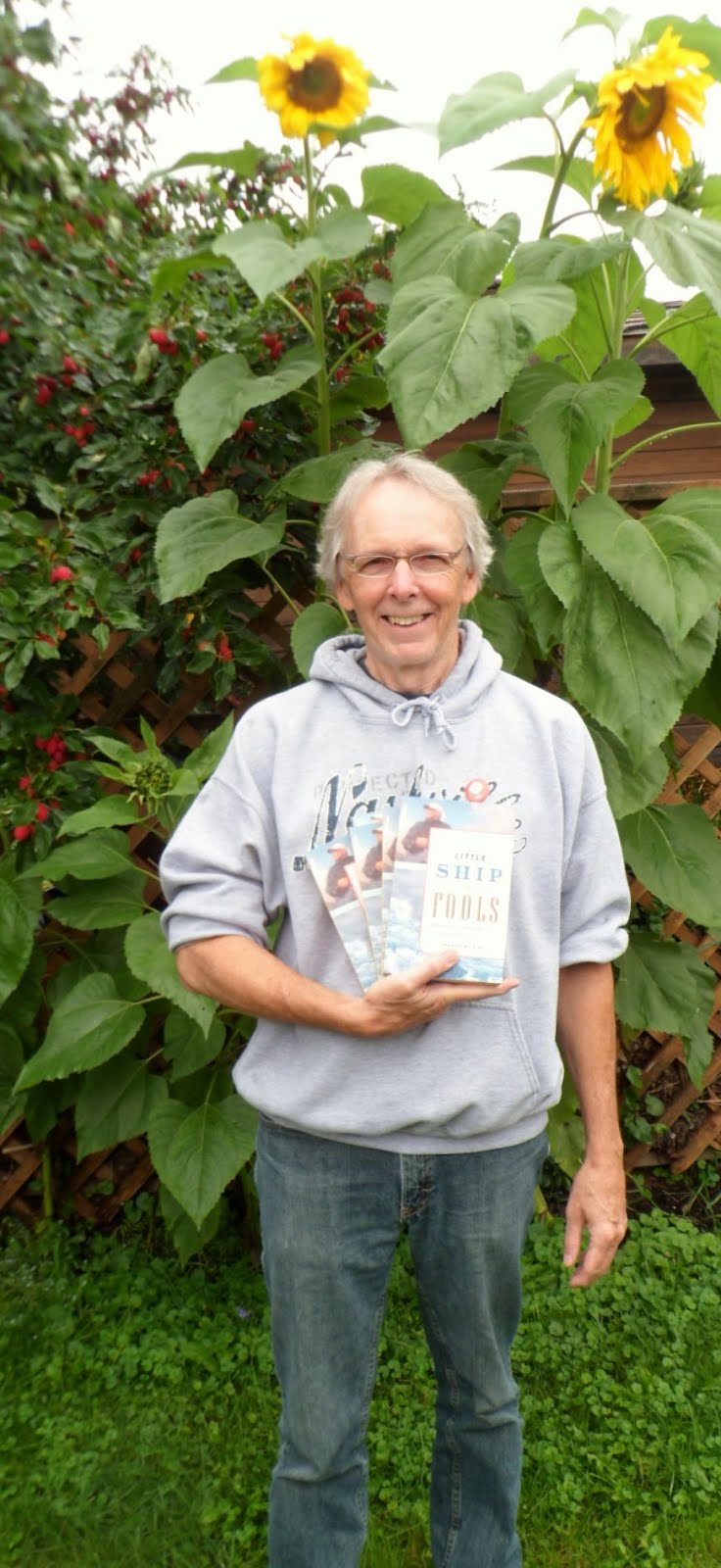


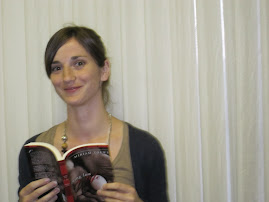




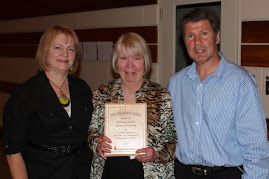




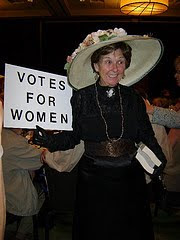






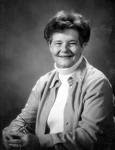


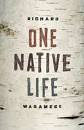

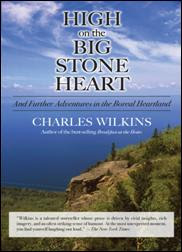


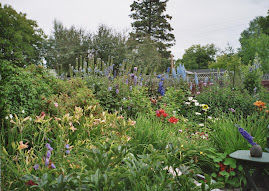

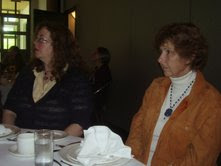


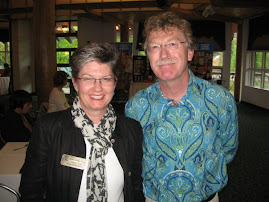

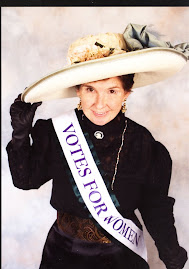


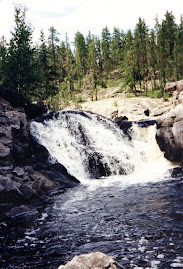


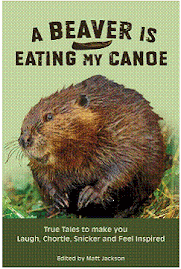

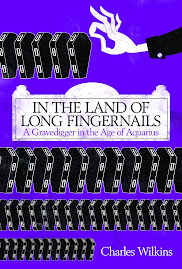
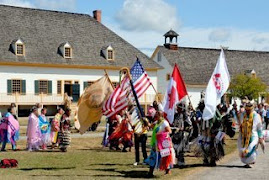
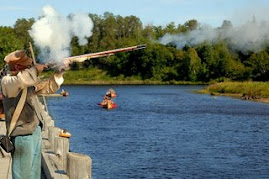
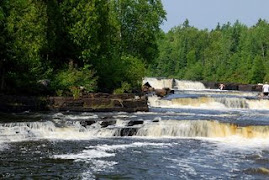

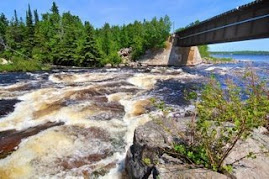
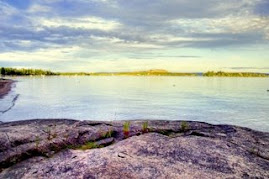

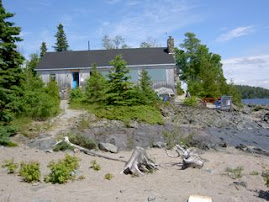
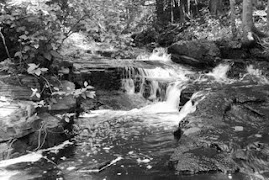

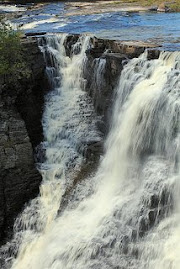

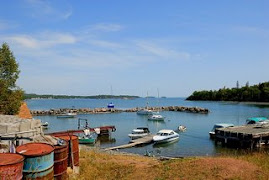

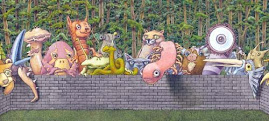
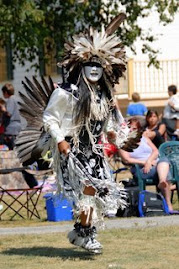
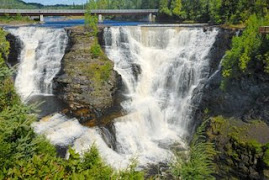
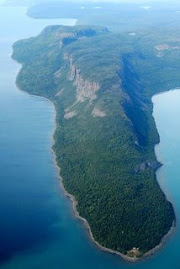

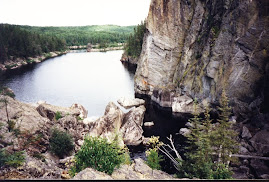



.JPG)