Fred Stenson’s recent novel, The Great Karoo, deals with Canadian involvement in the Boer War. This is his fourteenth book. Fred’s easy going approach brought forth some lively discussion and questions on historical writing in the workshop on Saturday afternoon.
Like many historical writers, Fred Stenson is a stickler for the historical record. He sees history as a sort of Rubic’s Cube, a cluster of interlocking facts. If you change one historical fact, you change the configuration and you might have to fudge the more.
The reader will not engage with patois, heavy accents, ancient speaking styles or Victorian style. The historical novelist must strive for a voice that is authentic to the times but is believable. Fred says he writes in neutral English and strives for an informal tone.
He looks for minor characters, real people if possible, who are close to the historical events.
You can’t research a fictional person. You research real people and fictionalize them.
The humour of the past can often jar today. He says you can always make fun of the oppressor but never the oppressed. Some words commonly used in the past are considered racist today and must be handled with care.
Research.
a) first read the big overview book, the tome.
b). as soon as you have a handle on the historical events you want to include, look for the original sources: the letters, diaries, journals etc. He had the amazing luck to find a set of letters from a soldier in the Boer War.
c) Look at photos, drawings and paintings of the period. However, he cautions to be wary of paintings. He learned this hard truth when he visited a battle site in South Africa and realized the painter had skewed the landscape completely.
d) Travel. Nothing is better than to visit the places in the book.
c) Read the old newspaper accounts but realize 19th century newspapers were often politically biased.
Monday, August 31, 2009


Sunday, August 30, 2009
The Narrative Spell at the Sleeping Giant Writers Festival
When I made my workshop picks a month ago, I agonized. What about “Writing the Past,” a memoir workshop with Leilah Nadir? At the festival many people spoke highly of that workshop.
However, I chose Fred Stenson’s presentations on ‘Advanced Fiction," a good choice for me. Fred turned out to be a genial person, friendly and knowledgeable. He focused on the narrative spell, the spell woven by the writer to engage the reader. This is what makes fiction work.
Fred spent some time discussing Point of View (POV). He said he himself had trouble working in third person POV and was much happier in first person until Carol Sheilds told him, “change all your I’s to he’s.” Very often an omniscient POV is brought in to at the beginning of a scene to describe the setting. Sometime the end of a story moves out of the mind of a character into a more universal or omniscient overview as it does at the end of the Joyce story, “The Dead.” Switching POV or using multiple POVs can be done with care, good signalling and a coherent motive. But it's not easy and often publishers are wary of multiple POV’s novels.
Here are a few Stenson pointers.
1. The more the novel mimics our own experience, the more we are engaged.
2. Plots are character driven. The characters move through decision points. If you have writers’ block, you may not know your character well enough. Go back and write a monologue for your character.
3. Plot outlines do not work. Stenson never relies on them. Your character will take on its own life and move away from the outline. You have to let your character go.
4. Readers often cannot say why a book leaves them cold. But one reason is the artificial feeling when the characters are forced to conform to the plot rather than visa versa.
Breaking the Spell. Every time you break the narrative spell, the reader surfaces. She may surface long enough to toss the book across the room. Here are some ways a writer can break the narrative spell.
a. A writer may switch POV without reason or warning. Disconcerting to the reader.
b. We try to write in scenes. But how can you check to make sure you are doing scenes? Check the dialogue. If there is no dialogue, you are not in a scene.
c. Transitions always break the spell but you have to have them to move to the next scene. Keep them short, preferably a word or a phrase.
d. Introspection and long thinks by the characters can be flat spots that cause the reader to disengage. Wordy musings are often unnecessary, especially in the midst of the action. Some writers do not let their characters think at all - Cormac McCarthy for one.
e. Exposition. You need it to get certain facts across to the reader but keep it brief or disguise the info or stagger it in. Dribble in the info. Front loading your story with info is boring.
f. Confusion in the plot. The reader has a right to know where and when the action is taking place, what is going on and who is speaking.
However, I chose Fred Stenson’s presentations on ‘Advanced Fiction," a good choice for me. Fred turned out to be a genial person, friendly and knowledgeable. He focused on the narrative spell, the spell woven by the writer to engage the reader. This is what makes fiction work.
Fred spent some time discussing Point of View (POV). He said he himself had trouble working in third person POV and was much happier in first person until Carol Sheilds told him, “change all your I’s to he’s.” Very often an omniscient POV is brought in to at the beginning of a scene to describe the setting. Sometime the end of a story moves out of the mind of a character into a more universal or omniscient overview as it does at the end of the Joyce story, “The Dead.” Switching POV or using multiple POVs can be done with care, good signalling and a coherent motive. But it's not easy and often publishers are wary of multiple POV’s novels.
Here are a few Stenson pointers.
1. The more the novel mimics our own experience, the more we are engaged.
2. Plots are character driven. The characters move through decision points. If you have writers’ block, you may not know your character well enough. Go back and write a monologue for your character.
3. Plot outlines do not work. Stenson never relies on them. Your character will take on its own life and move away from the outline. You have to let your character go.
4. Readers often cannot say why a book leaves them cold. But one reason is the artificial feeling when the characters are forced to conform to the plot rather than visa versa.
Breaking the Spell. Every time you break the narrative spell, the reader surfaces. She may surface long enough to toss the book across the room. Here are some ways a writer can break the narrative spell.
a. A writer may switch POV without reason or warning. Disconcerting to the reader.
b. We try to write in scenes. But how can you check to make sure you are doing scenes? Check the dialogue. If there is no dialogue, you are not in a scene.
c. Transitions always break the spell but you have to have them to move to the next scene. Keep them short, preferably a word or a phrase.
d. Introspection and long thinks by the characters can be flat spots that cause the reader to disengage. Wordy musings are often unnecessary, especially in the midst of the action. Some writers do not let their characters think at all - Cormac McCarthy for one.
e. Exposition. You need it to get certain facts across to the reader but keep it brief or disguise the info or stagger it in. Dribble in the info. Front loading your story with info is boring.
f. Confusion in the plot. The reader has a right to know where and when the action is taking place, what is going on and who is speaking.
Friday, August 28, 2009
First Night - four readers and one problem.
Readings at the Fort.
First up was Leilah Nadir. Born and raised in England of Iraqi parents, she started her memoir “The Orange Trees of Bagdad: In Search of My Lost Family” in 2003. When she finished four years later she could not believe the war was still going on. At first her family rejoiced at the fall of Saddam Hussein but their joy was replaced by horror as they watched the looting of Baghdad allowed by the new American overlords. Nadir’s account of the first weeks of American occupation took us into the heart of the fear and hardship experienced by the citizens.
Sheree-Lee Olson signed on as a kitchen worker on a laker setting out from Toronto harbour and wrote a novel, Sailor Girl, based on the experience. The excerpts she read zinged with metaphors: a gull “trailing a silvery cry:, Lake Ontario as “360 degrees of blue,” the water like “indigo skin,” “ a posse of gulls.” This Lake Superior denizen was enchanted.
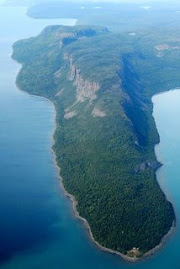
Moira Farr also has a Superior connection. To start her stint as a volunteer at the Thunder Cape Bird observatory, she was required to hike the Sleeping Giant trail into the facility. The excerpt she read from her unpublished novel “Birch Bark” centred on an Ojibway birch bark scroll. As she stood in the Great Hall, surrounded by the souvenirs of Native life, I thought her choice was most appropriate.
Fred Stenson read from his most recent novel The Great Karoo. The selection described the sea voyage taken in 1900 by the members of the Canadian Mounted Rifles, a Canadian military unit, sent off to South Africa to fight the Boers. The men, mostly Alberta cowboys, had brought their own horses aboard and the reading took us into the hardships and difficulties transporting the animals to the tropics. Lots of sea sickness and high adventure here.
The problem -- the notoriously poor acoustics in the Great Hall. Even using a microphone, many words garbled. The people is the front row and at the far back heard fairly clearly but those in the third row missed entire phrases. I started in the third row but after a few minutes grabbed an empty chair at the front where the sound was less blurred.
First up was Leilah Nadir. Born and raised in England of Iraqi parents, she started her memoir “The Orange Trees of Bagdad: In Search of My Lost Family” in 2003. When she finished four years later she could not believe the war was still going on. At first her family rejoiced at the fall of Saddam Hussein but their joy was replaced by horror as they watched the looting of Baghdad allowed by the new American overlords. Nadir’s account of the first weeks of American occupation took us into the heart of the fear and hardship experienced by the citizens.
Sheree-Lee Olson signed on as a kitchen worker on a laker setting out from Toronto harbour and wrote a novel, Sailor Girl, based on the experience. The excerpts she read zinged with metaphors: a gull “trailing a silvery cry:, Lake Ontario as “360 degrees of blue,” the water like “indigo skin,” “ a posse of gulls.” This Lake Superior denizen was enchanted.
Moira Farr also has a Superior connection. To start her stint as a volunteer at the Thunder Cape Bird observatory, she was required to hike the Sleeping Giant trail into the facility. The excerpt she read from her unpublished novel “Birch Bark” centred on an Ojibway birch bark scroll. As she stood in the Great Hall, surrounded by the souvenirs of Native life, I thought her choice was most appropriate.
Fred Stenson read from his most recent novel The Great Karoo. The selection described the sea voyage taken in 1900 by the members of the Canadian Mounted Rifles, a Canadian military unit, sent off to South Africa to fight the Boers. The men, mostly Alberta cowboys, had brought their own horses aboard and the reading took us into the hardships and difficulties transporting the animals to the tropics. Lots of sea sickness and high adventure here.
The problem -- the notoriously poor acoustics in the Great Hall. Even using a microphone, many words garbled. The people is the front row and at the far back heard fairly clearly but those in the third row missed entire phrases. I started in the third row but after a few minutes grabbed an empty chair at the front where the sound was less blurred.
Sunday, August 23, 2009
~Sleeping Giant Writers Festival News~
How lucky we are to have the Sleeping Giant Writers Festival which takes place August 28-30th at Fort William Historical Park. There is a wonderful roster of authors who will be reading Friday evening and Saturday evening. These readings are free of charge.
Hope you will attend.
The Northern Woman’s Bookstore has these authors books in stock, so drop by and
browse in advance of the Festival.
The authors reading Friday evening (7 p.m.) are:
SHEREE-LEE OLSON is a long-time Globe and Mail editor. She has published fiction and poetry in numerous literary magazines, as well as contributing personal essays to the Globe. As a student she worked as a cook on the Great Lakes freighters, which inspired her novel Sailor Girl.
LEILAH NADIR has written and broadcast political commentaries for CBC, the Globe and Mail and other publications. Her first book The Orange Trees of Baghdad: In Search of My Lost Family: A Memoir is winner of the George Ryga Award and is receiving international acclaim.
FRED STENSON is an award winning author of many fiction and non-fiction books, films and videos throughout his distinguished career. As a community and college writer-in-residence and as a faculty member of several Banff Centre writing studios, he has served as a mentor and editor for many developing writers of fiction.
MOIRA FARR has been on the faculty of the Rogers Literary Journalism Program at the Banff Centre for the Arts since 2001. Her essays, reviews, and features have appeared in many publications. She is an instructor in magazine writing at Carleton University’s School of Journalism.
Saturday evening (8 p.m.) will see:
LYNN COADY was nominated for the 1998 Governor General’s Award for fiction for her first novel Strange Heaven. She received the Canadian Author’s Association /Air Canada Award for the best writer under thirty and the Dartmouth Book and Writing Award for fiction. As well as her novels and short stories she has written award-winning plays and a screenplay.
LINDA L. RICHARDS, was one of six Canadian top mystery, thriller and crime writer who participated in the crime writing Symposium on the Book, at Simon Fraser University in 2008. Death Was in the Picture, her latest book set in Los Angeles in the 1930’s, is her second Kitty Pangborn novel. Linda is the editor of January Magazine, a respected web magazine.
BETSY STRUTHERS, has published eight books of poetry and three novels. Her awards
include the Pat Lowther Memorial Award for the best book of poetry by a Canadian
woman. Her work has been widely published in literary journals and anthologies.
SCOTT STEEDMAN, is the first editor and publisher to participate in SGWF. He has been an editor for books, magazines and multimedia. He is associate publisher at Douglas and McIntyre.
For information about Festival workshops, registration etc. go to www.fwhp.ca.
Hope you will attend.
The Northern Woman’s Bookstore has these authors books in stock, so drop by and
browse in advance of the Festival.
The authors reading Friday evening (7 p.m.) are:
SHEREE-LEE OLSON is a long-time Globe and Mail editor. She has published fiction and poetry in numerous literary magazines, as well as contributing personal essays to the Globe. As a student she worked as a cook on the Great Lakes freighters, which inspired her novel Sailor Girl.
LEILAH NADIR has written and broadcast political commentaries for CBC, the Globe and Mail and other publications. Her first book The Orange Trees of Baghdad: In Search of My Lost Family: A Memoir is winner of the George Ryga Award and is receiving international acclaim.
FRED STENSON is an award winning author of many fiction and non-fiction books, films and videos throughout his distinguished career. As a community and college writer-in-residence and as a faculty member of several Banff Centre writing studios, he has served as a mentor and editor for many developing writers of fiction.
MOIRA FARR has been on the faculty of the Rogers Literary Journalism Program at the Banff Centre for the Arts since 2001. Her essays, reviews, and features have appeared in many publications. She is an instructor in magazine writing at Carleton University’s School of Journalism.
Saturday evening (8 p.m.) will see:
LYNN COADY was nominated for the 1998 Governor General’s Award for fiction for her first novel Strange Heaven. She received the Canadian Author’s Association /Air Canada Award for the best writer under thirty and the Dartmouth Book and Writing Award for fiction. As well as her novels and short stories she has written award-winning plays and a screenplay.
LINDA L. RICHARDS, was one of six Canadian top mystery, thriller and crime writer who participated in the crime writing Symposium on the Book, at Simon Fraser University in 2008. Death Was in the Picture, her latest book set in Los Angeles in the 1930’s, is her second Kitty Pangborn novel. Linda is the editor of January Magazine, a respected web magazine.
BETSY STRUTHERS, has published eight books of poetry and three novels. Her awards
include the Pat Lowther Memorial Award for the best book of poetry by a Canadian
woman. Her work has been widely published in literary journals and anthologies.
SCOTT STEEDMAN, is the first editor and publisher to participate in SGWF. He has been an editor for books, magazines and multimedia. He is associate publisher at Douglas and McIntyre.
For information about Festival workshops, registration etc. go to www.fwhp.ca.
Friday, August 21, 2009
Atwood blogs and other lit news
Here is some Canlit news shamelessly cribbed from here and there.
Margaret Atwood has launched a blog to publicize her new book, Year of the Flood, to be released September 22. Check it out at http://marg09.wordpress.com/. Atwood must write in her sleep. Seems to me she just put out Payback: Debt and the Shadow Side of Wealth.
Harper Collins Canada, announced film rights to Lawrence Hill's novel The Book of Negroes have just been sold to noted Canadian director Clement Virgo’s Conquering Lion Pictures. Nice. It should make a great flick.
Canadian Literary Magazines have hit a funding wall. The Department of Canadian Heritage will no longer support small circulation mags. Says Minister James Moore in a letter to The New Quarterly. "The CPF will support a broad range of periodicals, but it will no longer offer support to titles that sell fewer than 5,000 copies total per year, or specialized support for arts and literary magazines, including those that sell fewer than 5,000 copies a year."
Atwood says it all. "The Harper Tories are out to squash the arts into the dust. They basically just hate us."
Margaret Atwood has launched a blog to publicize her new book, Year of the Flood, to be released September 22. Check it out at http://marg09.wordpress.com/. Atwood must write in her sleep. Seems to me she just put out Payback: Debt and the Shadow Side of Wealth.
Harper Collins Canada, announced film rights to Lawrence Hill's novel The Book of Negroes have just been sold to noted Canadian director Clement Virgo’s Conquering Lion Pictures. Nice. It should make a great flick.
Canadian Literary Magazines have hit a funding wall. The Department of Canadian Heritage will no longer support small circulation mags. Says Minister James Moore in a letter to The New Quarterly. "The CPF will support a broad range of periodicals, but it will no longer offer support to titles that sell fewer than 5,000 copies total per year, or specialized support for arts and literary magazines, including those that sell fewer than 5,000 copies a year."
Atwood says it all. "The Harper Tories are out to squash the arts into the dust. They basically just hate us."
Wednesday, August 19, 2009
Podcasts to Die For
I'm falling in love with podcasts.
This week, I’ve listened to an Anton Chekhov story every day. I have listened to a dozen or so stories from the New Yorker as well as literary podcasts from The New York Times, The New York review of Books, the CBC, the Guardian. Podcasts can be loaded on to a Cd or into an MP3 player. I have been listening on my computer.
http://www.learnoutloud.com/Home offers audio books for sale but there is a nice free section with classics including the incomparable Anton. I also looked in at the poetry section and heard a bit of Shelly to help me go through my e mails.
http://www.newyorker.com/online/podcasts/outloud is a fantastic site of readings from the New Yorker but the prize is http://www.newyorker.com/online/podcasts/fiction . Here well known authors chose a favourite New Yorker story to read and discuss.
http://www.guardian.co.uk/books/series/books
for interviews and book excerpts.
http://www.cbc.ca/podcasting/pastpodcasts.html?29#ref29
This site features the past Shelagh Rogers broadcasts with various Canadian writers. I think it is one of the best sites I have found so far. It seems to my this Canadian site is more relaxed, funnier, more radical in its choices, (listen to the Suzuki interview) and of better quality than any other I have come across. The American sites are sharp, all business and the British site (the Guardian) clipped and formal. A bit stereotyped, OK, but no other interviewer I have heard can match Shelagh Roger's laugh.
Here are other sites I have found so far.
http://www.nytimes.com/ref/books/books-podcast-archive.html?ref=books
The New York Times interviews writers. Even though the sound sometimes cuts out in middle of a broadcast, the range of topics is so vast and interesting, I still recommend it.
The local library has links to podcasts but you have to enter your library card number and a password for each listening, a bit of a pain.
This week, I’ve listened to an Anton Chekhov story every day. I have listened to a dozen or so stories from the New Yorker as well as literary podcasts from The New York Times, The New York review of Books, the CBC, the Guardian. Podcasts can be loaded on to a Cd or into an MP3 player. I have been listening on my computer.
http://www.learnoutloud.com/Home offers audio books for sale but there is a nice free section with classics including the incomparable Anton. I also looked in at the poetry section and heard a bit of Shelly to help me go through my e mails.
http://www.newyorker.com/online/podcasts/outloud is a fantastic site of readings from the New Yorker but the prize is http://www.newyorker.com/online/podcasts/fiction . Here well known authors chose a favourite New Yorker story to read and discuss.
http://www.guardian.co.uk/books/series/books
for interviews and book excerpts.
http://www.cbc.ca/podcasting/pastpodcasts.html?29#ref29
This site features the past Shelagh Rogers broadcasts with various Canadian writers. I think it is one of the best sites I have found so far. It seems to my this Canadian site is more relaxed, funnier, more radical in its choices, (listen to the Suzuki interview) and of better quality than any other I have come across. The American sites are sharp, all business and the British site (the Guardian) clipped and formal. A bit stereotyped, OK, but no other interviewer I have heard can match Shelagh Roger's laugh.
Here are other sites I have found so far.
http://www.nytimes.com/ref/books/books-podcast-archive.html?ref=books
The New York Times interviews writers. Even though the sound sometimes cuts out in middle of a broadcast, the range of topics is so vast and interesting, I still recommend it.
The local library has links to podcasts but you have to enter your library card number and a password for each listening, a bit of a pain.
Saturday, August 15, 2009
Alan Wade Wades In and Extends an Invitation
The new magazine 807 opened a discussion about local writing called The Politics of Here... Here, Alan Wade gives us a wonderful overview of creative Thunder Bay - the place is indeed jumping. Alan ends with an invitation
I'm so happy for an opportunity to respond to the discussion in 807 about how our community relates to the writer since Thunder Bay has had a profound effect on my writing.
Starting in 1972 I wrote a variety of different books, which had only one reader: myself. Not until I started to write about what is literally in front of me- my own community- did I create anything acceptable to a professional editor. In 2001 I returned from my job teaching at the College and there they were sitting on the steps as I came in. I didn't know which was more exciting- the two copies of the Greenmantle newspaper with my article about a local hanging or the $40 cheque.
The irony was that I had always been intrigued by local writing and local writers. When I grew up in Welland, Ontario I encountered only one local book, Welland Workers Make History. Here it was a very different story. Here I found a community alive with literature. Even before I came north in 1967 to teach at Westgate Collegiate, I had heard about Sheila Burnford's Incredible Journey and how an American publisher sold a million copies of it after McLelland and Stewart turned it down. I remember attending the book launch for Claude Liman's Landings. Wow, a writer living in my own community.
I got a similar thrill reading The Traitor Game, which I picked it up at the bookstore on Cumberland St., just south of Red River Road. I had no idea the novel was local until I started reading it. When it mentioned Port Arthur I first wondered if it might be Port Arthur in some other country. But no, it was the Port Arthur I lived in. (As I recall Fort William was mentioned only once.)
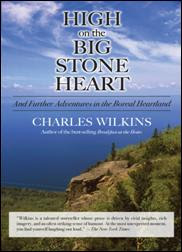
I've noticed a very strong sense of local setting in a lot of our local writing- In Nancy Bjorgo's Pierrot, Loranne Brown's Handless Maiden, Olga Landiak's Death of a Sweet Gal, Joan Skelton's The Wreck of the Edmund Fitzgerald, and Charlie Wilkins Breakfast at the Hoito. Sure, other communities' writers sometimes reflect a local setting- in The Suicide Murders Howard Engel's Benny Cooperman sleuths his way around Grantham (i.e., St. Catharines.) The teledrama based on this novel even shows the Lancer Restaurant on St. Paul St., where I and my buddies used to go to after hitchhiking to St. Catharines. Nonetheless, I have a very strong feeling our writers reflect our community explicitly to a greater degree than others in comparable communities.
I was turned on by talking to writers about their writing and publishers; Elinor Barr about her book on the White Otter Castle; Jennie Beck about her A World of Dragons, published by Penumbra, at the time located in Moonbeam, Ontario, near Kapuskasing (I met both individuals in Writers Northward which I belonged to in the early eighties); Leonard Dick about his Broken Spirit published by Highway Book Shop (I talked to him briefly at one of his Moccasin Joe performances at the Little Finn Hall.)
On two occasions when I was reading a piece of local writing, it turned out, through no intention of my own, that I was in the exact location being written about. Once at the window at the Waverley Library when I read in Joe Mauro's history of Thunder Bay about a confrontation between unemployed workers and the cops in 1932, I was struck by the fact this event had occurred just up the street at Regent Street and Waverley Park. I had a similar sense when sitting in the Kestitupa Restaurant I opened up my copy of The Wolf's Eye and began reading Betty Kouhi's A Canadian Story, set on Bay Street.
I've had many other similar experiences over the years with local writing. With Bill Macdonald's Whales of Superior, a book of stories told in the Kestitupa. With another of his novels in which a local gangster has a fight in the tunnel of the Marriagi Hotel. The story is fanciful but the tunnel did exist. I saw it on the last day the hotel was open, thanks to Heikki Tamminen, its last owner, whom I knew from my days working in the bush. With the thirties' novel Beauty Not Complete (found in the local collection of the Brodie Library), especially when the author talked about an accident tobogganing down the Courthouse Hill and brought back personal memories of sliding down that same hill with my daughter, hitting a bump at the bottom, and knocking the wind out of myself to the point I feared for about five minutes I might not be able to make it to work the next day.
With Joan Skelton's story in Flying Colours Turn-Table" about women who raped a man outside that courthouse. With Jack Shedden's story in Fire Flies- Winky Maki. The people I had met working in the bush were all "distilled" into this character. He was more real in that sense that the real ones I had encountered. I'll never forget talking to Jack at the Writer's Circle and he telling me about having published pool hall stories in a pool magazine. We went for coffee after and at the end of the evening it turned out that we had met over three decades previously- I had taught him history at Westgate Collegiate in the late sixties.
The 807 discussion referred briefly to writing groups but not to something I regard as significant- the number of them. I count seven- NOW, Writers' Circle, Poetry Workshop, Paratactics (another poetry group), Writers Guild, LUNA (Lakehead Unfinished Novelists' Association), and PWAC (a periodical writer's group.) I can't believe any other community has as many writing groups on a per-capita basis. When Mark Munger spoke here (at the Waverley Library) I asked him how many Duluth has and he told me exactly what I expected to hear: "One."
My association with the first two has been invaluable. The first time my writing ever saw print was in the Writers' Circle Echoes of Thunder. NOW has been kind enough to ask me to read four times and helped me feel that maybe "somebody's listening." Writers have to live a life quite apart from the rest of the world but we don't want it to be totally apart, we want ultimately to connect to others. I totally endorse Mark Munger's comment, "Only diary writers write for themselves."
For my last reading NOW actually paid me $15, bringing my lifetime "writerly" earnings to $1.495. The NOW newsletter also published some of my stories. Its Now Here This section contains juicy morsels of just what's happening with "local lit." Another "must read" on the subject is Joan Baril's website: literaryblogspot.com. I anxiously await each new issue. It gave me the name of a book of a local cop's memoirs. I had been told about it by a fellow teacher at Thunder Bay Literacy but she wasn't able to remember any details I could use to track it down. (It's by James Forbes.)
Something else alluded to in the 807 discussion which deserves a lot more comment is our lack of a small press. Even though impersonal communication has increased a great deal, you still can't beat direct face-to-face communication. I remember reading one Toronto writer saying how at a poetry reading she gave an editor approached her and said if she ever wanted to write a novel to come and see him. She did a few years later and "the novel happened." Since we don't have an editor to approach like that, it's less likely we'll get one interested in our writing. (But by no means impossible, as a considerable number of local writers have proven.)
I'm totally convinced a small press is viable. As Betty Kouhi said to me at one NOW reading, "Cape Breton with a smaller population than Thunder Bay has two small presses." Also, Northeastern Ontario, with only twice our population has three- White Mountain (New Liskeard), Your Scriveners (Sudbury), Highway (Cobalt). It used to have Penumbra, which I mentioned earlier. It has since moved "down East" (to Manotick) but has continued to publish local authors- Mary Frost and Betty Kouhi, for example.
Something not mentioned at all that I feel a strong need for is a writer's hangout, a place where I can go and bump into other writers, even or especially if I haven't met them before, and exchange ideas about what we've written, how we've written it, and most importantly, how we've failed or succeeded in attracting editors' interest. And to complain about those "pain-in-the-butt" editors who constantly harass us to send them new material (that's in our writers' dreams, of course.) l've taken one small step in this direction. Almost every Saturday at 12:30 at Starbucks, Chapter's, I get together with a few people from the Writers' Circle. If you feel the same need why don't you join us? (It's probably a good idea to get in touch with me first. Call me, Alan Wade, at 344-7994 or email me at: awade@confederationc.on.ca.)
I'm so happy for an opportunity to respond to the discussion in 807 about how our community relates to the writer since Thunder Bay has had a profound effect on my writing.
Starting in 1972 I wrote a variety of different books, which had only one reader: myself. Not until I started to write about what is literally in front of me- my own community- did I create anything acceptable to a professional editor. In 2001 I returned from my job teaching at the College and there they were sitting on the steps as I came in. I didn't know which was more exciting- the two copies of the Greenmantle newspaper with my article about a local hanging or the $40 cheque.
The irony was that I had always been intrigued by local writing and local writers. When I grew up in Welland, Ontario I encountered only one local book, Welland Workers Make History. Here it was a very different story. Here I found a community alive with literature. Even before I came north in 1967 to teach at Westgate Collegiate, I had heard about Sheila Burnford's Incredible Journey and how an American publisher sold a million copies of it after McLelland and Stewart turned it down. I remember attending the book launch for Claude Liman's Landings. Wow, a writer living in my own community.
I got a similar thrill reading The Traitor Game, which I picked it up at the bookstore on Cumberland St., just south of Red River Road. I had no idea the novel was local until I started reading it. When it mentioned Port Arthur I first wondered if it might be Port Arthur in some other country. But no, it was the Port Arthur I lived in. (As I recall Fort William was mentioned only once.)
I've noticed a very strong sense of local setting in a lot of our local writing- In Nancy Bjorgo's Pierrot, Loranne Brown's Handless Maiden, Olga Landiak's Death of a Sweet Gal, Joan Skelton's The Wreck of the Edmund Fitzgerald, and Charlie Wilkins Breakfast at the Hoito. Sure, other communities' writers sometimes reflect a local setting- in The Suicide Murders Howard Engel's Benny Cooperman sleuths his way around Grantham (i.e., St. Catharines.) The teledrama based on this novel even shows the Lancer Restaurant on St. Paul St., where I and my buddies used to go to after hitchhiking to St. Catharines. Nonetheless, I have a very strong feeling our writers reflect our community explicitly to a greater degree than others in comparable communities.
I was turned on by talking to writers about their writing and publishers; Elinor Barr about her book on the White Otter Castle; Jennie Beck about her A World of Dragons, published by Penumbra, at the time located in Moonbeam, Ontario, near Kapuskasing (I met both individuals in Writers Northward which I belonged to in the early eighties); Leonard Dick about his Broken Spirit published by Highway Book Shop (I talked to him briefly at one of his Moccasin Joe performances at the Little Finn Hall.)
On two occasions when I was reading a piece of local writing, it turned out, through no intention of my own, that I was in the exact location being written about. Once at the window at the Waverley Library when I read in Joe Mauro's history of Thunder Bay about a confrontation between unemployed workers and the cops in 1932, I was struck by the fact this event had occurred just up the street at Regent Street and Waverley Park. I had a similar sense when sitting in the Kestitupa Restaurant I opened up my copy of The Wolf's Eye and began reading Betty Kouhi's A Canadian Story, set on Bay Street.
I've had many other similar experiences over the years with local writing. With Bill Macdonald's Whales of Superior, a book of stories told in the Kestitupa. With another of his novels in which a local gangster has a fight in the tunnel of the Marriagi Hotel. The story is fanciful but the tunnel did exist. I saw it on the last day the hotel was open, thanks to Heikki Tamminen, its last owner, whom I knew from my days working in the bush. With the thirties' novel Beauty Not Complete (found in the local collection of the Brodie Library), especially when the author talked about an accident tobogganing down the Courthouse Hill and brought back personal memories of sliding down that same hill with my daughter, hitting a bump at the bottom, and knocking the wind out of myself to the point I feared for about five minutes I might not be able to make it to work the next day.
With Joan Skelton's story in Flying Colours Turn-Table" about women who raped a man outside that courthouse. With Jack Shedden's story in Fire Flies- Winky Maki. The people I had met working in the bush were all "distilled" into this character. He was more real in that sense that the real ones I had encountered. I'll never forget talking to Jack at the Writer's Circle and he telling me about having published pool hall stories in a pool magazine. We went for coffee after and at the end of the evening it turned out that we had met over three decades previously- I had taught him history at Westgate Collegiate in the late sixties.
The 807 discussion referred briefly to writing groups but not to something I regard as significant- the number of them. I count seven- NOW, Writers' Circle, Poetry Workshop, Paratactics (another poetry group), Writers Guild, LUNA (Lakehead Unfinished Novelists' Association), and PWAC (a periodical writer's group.) I can't believe any other community has as many writing groups on a per-capita basis. When Mark Munger spoke here (at the Waverley Library) I asked him how many Duluth has and he told me exactly what I expected to hear: "One."
My association with the first two has been invaluable. The first time my writing ever saw print was in the Writers' Circle Echoes of Thunder. NOW has been kind enough to ask me to read four times and helped me feel that maybe "somebody's listening." Writers have to live a life quite apart from the rest of the world but we don't want it to be totally apart, we want ultimately to connect to others. I totally endorse Mark Munger's comment, "Only diary writers write for themselves."
For my last reading NOW actually paid me $15, bringing my lifetime "writerly" earnings to $1.495. The NOW newsletter also published some of my stories. Its Now Here This section contains juicy morsels of just what's happening with "local lit." Another "must read" on the subject is Joan Baril's website: literaryblogspot.com. I anxiously await each new issue. It gave me the name of a book of a local cop's memoirs. I had been told about it by a fellow teacher at Thunder Bay Literacy but she wasn't able to remember any details I could use to track it down. (It's by James Forbes.)
Something else alluded to in the 807 discussion which deserves a lot more comment is our lack of a small press. Even though impersonal communication has increased a great deal, you still can't beat direct face-to-face communication. I remember reading one Toronto writer saying how at a poetry reading she gave an editor approached her and said if she ever wanted to write a novel to come and see him. She did a few years later and "the novel happened." Since we don't have an editor to approach like that, it's less likely we'll get one interested in our writing. (But by no means impossible, as a considerable number of local writers have proven.)
I'm totally convinced a small press is viable. As Betty Kouhi said to me at one NOW reading, "Cape Breton with a smaller population than Thunder Bay has two small presses." Also, Northeastern Ontario, with only twice our population has three- White Mountain (New Liskeard), Your Scriveners (Sudbury), Highway (Cobalt). It used to have Penumbra, which I mentioned earlier. It has since moved "down East" (to Manotick) but has continued to publish local authors- Mary Frost and Betty Kouhi, for example.
Something not mentioned at all that I feel a strong need for is a writer's hangout, a place where I can go and bump into other writers, even or especially if I haven't met them before, and exchange ideas about what we've written, how we've written it, and most importantly, how we've failed or succeeded in attracting editors' interest. And to complain about those "pain-in-the-butt" editors who constantly harass us to send them new material (that's in our writers' dreams, of course.) l've taken one small step in this direction. Almost every Saturday at 12:30 at Starbucks, Chapter's, I get together with a few people from the Writers' Circle. If you feel the same need why don't you join us? (It's probably a good idea to get in touch with me first. Call me, Alan Wade, at 344-7994 or email me at: awade@confederationc.on.ca
Friday, August 14, 2009
Thunder Bay strikes again, Ten Stories High
John Pringle was a runner up for the 2009 Ten Stories High contest of the Canadian Authors Association, Niagara Branch. His winning story is called Spirals. Joan Baril came second in this competition with a story titled "Wine". Both will be published in the magazine Ten Stories High. Stay tuned to this space to read the stories. Also Joan will appear in the fall edition of the literary magazine Other Voices with a story called Currents.
Sunday, August 2, 2009
A Year of Books for a Club
A Winnipeg book club gives us their list for next year.
1 Be Near Me by Andrew O'Hagan
2. The Book of Negroes by Lawrence Hill
3. Reading by Lightening by Joan Thomas
4. Fault Lines by Nancy Huston
5. The Outlander by Gil Adamson
6. Going Ashore by Mavis Gallant
7. Unless by Carol Sheilds
8. Home by Marilyn Robinson
9. Persuasion by Jane Austin
1 Be Near Me by Andrew O'Hagan
2. The Book of Negroes by Lawrence Hill
3. Reading by Lightening by Joan Thomas
4. Fault Lines by Nancy Huston
5. The Outlander by Gil Adamson
6. Going Ashore by Mavis Gallant
7. Unless by Carol Sheilds
8. Home by Marilyn Robinson
9. Persuasion by Jane Austin
Louise Penny checks in
Former Thunder Bay resident, mystery writer Louise Penny tells us about her latest book in the Inspector Gammach series
As you know, book 5 in the Chief Inspector Gamache novels is coming out this fall, in late September, early October. It’s called THE BRUTAL TELLING, and here is a little bit about it:
In the heart of the forest, two men sit at midnight, haunted by fear of discovery. In a few hours’ time, one of them will be dead, his secrets following him to the grave... When C. I. Gamache is called to investigate a murder in a picturesque Three Pines, he finds a village in chaos. A man has been found, bludgeoned to death, and there is no sign of a weapon, a motive or even the dead man’s name. Gamache and his colleagues, Inspector Beauvoir and Agent Isabelle Lacoste, start to dig under the skin of this peaceful haven for clues. They slowly uncover a trail of stolen treasure, mysterious codes and a shameful history that begins to shed light on the victim’s identity – and point to a horrible killer.
All I can says is "Yikes!"
As you know, book 5 in the Chief Inspector Gamache novels is coming out this fall, in late September, early October. It’s called THE BRUTAL TELLING, and here is a little bit about it:
In the heart of the forest, two men sit at midnight, haunted by fear of discovery. In a few hours’ time, one of them will be dead, his secrets following him to the grave... When C. I. Gamache is called to investigate a murder in a picturesque Three Pines, he finds a village in chaos. A man has been found, bludgeoned to death, and there is no sign of a weapon, a motive or even the dead man’s name. Gamache and his colleagues, Inspector Beauvoir and Agent Isabelle Lacoste, start to dig under the skin of this peaceful haven for clues. They slowly uncover a trail of stolen treasure, mysterious codes and a shameful history that begins to shed light on the victim’s identity – and point to a horrible killer.
All I can says is "Yikes!"
Subscribe to:
Posts (Atom)











































.JPG)