Wednesday, November 26, 2008
Historical Favourites
Three novels I have read and enjoyed this year are "ROMA" by Steven Saylor - The story of Rome from its beginning to the time of Augustus, "EMPEROR The Gods Of War" by Conn Iggulden - The story of Julius Caesar, and "Helen of Troy" by Margaret George. Brian Spare.


Sunday, November 23, 2008
More best of 2008
A former and anonymous Thunder Bay resident writes
These are the names of some books for children:
Paddle to The Sea ;
Tree House Mysteries ( all 26 of them ) My grandchildren love them.
Bob the Builder; Anything with Dump Trucks, Fire Engines;
101 Dalmations
For Adults
Mark Stein's " Only In America
100 Canadian Heroines by Merna Forster.
Edinburgh by David Daiches
These are the names of some books for children:
Paddle to The Sea ;
Tree House Mysteries ( all 26 of them ) My grandchildren love them.
Bob the Builder; Anything with Dump Trucks, Fire Engines;
101 Dalmations
For Adults
Mark Stein's " Only In America
100 Canadian Heroines by Merna Forster.
Edinburgh by David Daiches
Saturday, November 22, 2008
Your Yearly Picks
Climb on board and let us know the title or titles of your favourite reads in 2008. The books do not have to be recently published. The classics can be tossed in. Send your list to jbaril@tbaytel.net . I am also interested to hear what you would recommend as a gift this Christmas. What is a good gift for a child? A youth? Anyone on the gift list?
More yearly picks.
Sualt Ste.Marie writer Ted Fryia weighs in with his favs for 2008.
I want to give you my BEST READ OF THE LAST WHILE:
Probably the funniest book I've ever read, "LAMB: The Gospel According to Biff" by Christopher Moore. The book is Biff's (Jesus' childhood friend) account of his and Jesus' (Joshua's) exploits that date after Joshua's birth - the story we were never told. The Archangel Gabriel has brought Biff back to earth in order produce the missing gospel - "let it be written" as Joshua had told Biff to do on so many occassions.
The Gospel According to Biff is a laugh out loud read from beginning to end and works on so many levels - whether you are a believer or not. Most highly recommended.
To be honest, the last few months have been exceptional for reads: I think I've mentioned Afterlands (Steve Heighton) when I was in T.Bay. Also, The Golden Spruce.
I'm almost finished Gargoyle by Andrew Davidson, which is his debut novel a smash hit for critics and sales - seven figure contract through a bidding war. It's terrific, but one has to feel sympathy for poor Davidson - having to match or better Gargoyle with his next novel. Oh - only if we all had such problems - hey? But if I had to pick just one, let it be written, Biff wins.
I want to give you my BEST READ OF THE LAST WHILE:
Probably the funniest book I've ever read, "LAMB: The Gospel According to Biff" by Christopher Moore. The book is Biff's (Jesus' childhood friend) account of his and Jesus' (Joshua's) exploits that date after Joshua's birth - the story we were never told. The Archangel Gabriel has brought Biff back to earth in order produce the missing gospel - "let it be written" as Joshua had told Biff to do on so many occassions.
The Gospel According to Biff is a laugh out loud read from beginning to end and works on so many levels - whether you are a believer or not. Most highly recommended.
To be honest, the last few months have been exceptional for reads: I think I've mentioned Afterlands (Steve Heighton) when I was in T.Bay. Also, The Golden Spruce.
I'm almost finished Gargoyle by Andrew Davidson, which is his debut novel a smash hit for critics and sales - seven figure contract through a bidding war. It's terrific, but one has to feel sympathy for poor Davidson - having to match or better Gargoyle with his next novel. Oh - only if we all had such problems - hey? But if I had to pick just one, let it be written, Biff wins.
Friday, November 21, 2008
YA Picks
Our expert on Young Adult books, 16 year old Sarah Eddy, avid reader and book lover, suggests the following would be good choices as Christmas presents for teens 16 and up. Her list is a mix of old goodies and new.
1. The Twilight Series by Stephanie Meyers. It's best to read the series in order.
2. Poisonwood Bible by Barbara Kingsolver
3. Book Thief by Markus Zusak
4. A Tree Grows in Brooklyn by Betty Smith
5. Onee Fifth Avenue by Candace Bushnell
6. Gone with the Wind by Margaret Mitchell
7. I Capture the Castle by Dodie Smith
1. The Twilight Series by Stephanie Meyers. It's best to read the series in order.
2. Poisonwood Bible by Barbara Kingsolver
3. Book Thief by Markus Zusak
4. A Tree Grows in Brooklyn by Betty Smith
5. Onee Fifth Avenue by Candace Bushnell
6. Gone with the Wind by Margaret Mitchell
7. I Capture the Castle by Dodie Smith
Sunday, November 16, 2008
Your fav book of the year
Send us your pick for your fav read this year. It does not have to be a new book, just one you enjoyed in 2008.
Joyce Michalchuk starts the list.
My favourite genre is autobiography, by far, and I was very engrossed recently by a book called "Ghost Rider". It was a Drainie-Taylor Biography Prize Finalist, chosent by the Writers' Trust of Canada because of its "exceptional merit" as one of the five best biographies of the year.
The writer is Neal Peart, who is a.k.a. the drummer in the Canadian legendary rock band, Rush. Within a 10-month period, he faced the deaths of his wife/best friend, and their teenage daughter. It is an often-harrowing, but ultimately inspiring, piece of work which speaks to the ultimate resilience of the human spirit.
Peart is an excellent writer, previously published as is known as an "internationally best-selling author". If you like autobiographies, have experience with bereavement, find this write-up interesting, or know of anyone who might benefit from reading this, do consider picking it up, as you won't be sorry. (And, of course, this is my opinion, for what it's worth!)
Cheers to more good reading,
Joyce Michalchuk
Joyce Michalchuk starts the list.
My favourite genre is autobiography, by far, and I was very engrossed recently by a book called "Ghost Rider". It was a Drainie-Taylor Biography Prize Finalist, chosent by the Writers' Trust of Canada because of its "exceptional merit" as one of the five best biographies of the year.
The writer is Neal Peart, who is a.k.a. the drummer in the Canadian legendary rock band, Rush. Within a 10-month period, he faced the deaths of his wife/best friend, and their teenage daughter. It is an often-harrowing, but ultimately inspiring, piece of work which speaks to the ultimate resilience of the human spirit.
Peart is an excellent writer, previously published as is known as an "internationally best-selling author". If you like autobiographies, have experience with bereavement, find this write-up interesting, or know of anyone who might benefit from reading this, do consider picking it up, as you won't be sorry. (And, of course, this is my opinion, for what it's worth!)
Cheers to more good reading,
Joyce Michalchuk
Saturday, November 15, 2008
In the Land of Long Fingernails: A Gravedigger in the Age of Aquarius
An excerpt from Charlie Wilkin's memoir of the long-ago summer when he worked in a graveyard.
The next morning, in heavy rain, my car refused to start. I took the bus to the cemetery, arrived late, and was put to work in the maintenance shop, applying gold-coloured lacquer to an elaborate concrete outer vault that was to be used the following day. The thing was big enough for a stack of bodies, and on the crest of its arched lid was the likeness of an open book, presumably the Lamb’s Book of Life. On it, I was to apply neat lines of letters forming the dead person’s name and the message “Love Eternal” and a biblical reference, Psalm 46:10. All of which was no more or less than the usual freakish provision for the arrival of the dead at Willowlawn Everlasting.
At break, Peter informed me that the funeral was going to be a corker—a seventeen-year-old girl had died of bone cancer. He had been told to expect four school buses of teenagers.
I blew a reefer under the eaves of the chapel, out of the rain, and feeling as remote as a star went back into the shop to apply a second coat of paint. The teenager’s death was made calculably more ominous for me by her condemnation to the vulgar airless crypt that I was in the process of decorating and in which she was on the cusp of spending eternity. Hogjaw came in, as stoned as I, and for a moment, on a whim, I jumped into the box and struck a surfing pose, and jumped out.
“Lie down in it,” he said, and I stepped back in and lay down.
“You look good,” he said.
“I’m alive,” I said. “It doesn’t count.”
“You’re stoned is what you are.”
“You get in,” I said as I got out, and he stepped in and lay down and shut his eyes.
Scotty had told me that from the age of forty the actress Sarah Bernhardt had slept in the coffin in which she would eventually be buried. He had read it in Midnight. I mentioned it to Hogjaw, who said he thought people could do “a helluva lot more in coffins” than they do.
I asked him “Like what?” and he said. “All they do now is rot and go to hell.” He opened his eyes and asked if I believed there was an afterlife, to which I responded that it was a nice idea, one that I had once held inviolable, but that I no longer knew. I asked for his own views on the age-old stumper, and he said, “There is as long as we’re alive—after that, what the fuck does it matter?” He closed his eyes again and held up his hands as if to receive the blessing of the Holy Spirit. He said, “As far as I’m concerned, this is all there is … this box … this dope … this gawdam fucking graveyard.” He stood up, stepped out of the vault, and brushed the concrete dust off his clothes. “And this dead teenager,” he said, and he looked at me and rapped his knuckles on the side of the vault. “I hope I’m wrong for her sake.”
“I hope you are, too,” I told him.
“If I am,” he said, “I’ll be the first guy in hell to admit it.”
I applied the letters meticulously but used a little too much glue, allowing a few of them to drift out of line on the slightly bevelled surface. After break, I redid the lot of them, including the scriptural injunction, “Be still, and know that I am God.” Then I rolled another joint, and walked out into the Garden of the Blessed Redeemer, where Denise was trimming stones. We smoked and sat for a few minutes, at one point touching fingers in the grass. I told her about the verse on the dead girl’s vault, and she told me she thought God was the stillness.
“God is love,” she said as I got up to go.
I returned to the shop and, with the glue nearly dry, spray-painted the inscription and went over to the shed and ate a peanut butter sandwich and a couple of overripe peaches. I rolled another joint.
The sun appeared as I ate, and I spent most of the afternoon cutting grass on the sit-down mower. From time to time I sneezed, or stifled a sneeze. About an hour from quitting time my eyes began to itch and then to water, and my nose began to run. I sneezed several times in succession, then, quite suddenly, was convulsed by a sneezing fit so forceful that I had to stop the mower, get off and lean against a tree while my body rid itself of twenty, maybe thirty, violent sneezes. Within minutes, my eyes were all but swollen shut.
I slumped into the maintenance shop a few minutes before five and was greeted by howls of laughter over my appearance. Peter diagnosed hay fever—a menace that he said had given him fits during his first four years of cemetery work. “If you wanta get rid of it,” he told me perfunctorily, “you get allergy shots. It’s too late this year.”
I survived the night with heavy does of antihistamine tablets, and had to beg off mowing the following morning. Instead, I laid out graves with Hogjaw who, in Luccio’s absence and with Peter’s ascent into management, had become my closest companion on the job.
Throughout the morning, I suffered waves not just of hay fever but of draining pessimism as we set up to bury the dead teenager. The grave, when we finished it, contained six or eight inches of greyish water, as well as a substantial ball of newspaper that Hogjaw had used to dry the digger controls. Peter had ordered Denise to polish up the lowering device, whose gleaming stainless steel proclaimed its morbid welcome to the underworld.
From behind a grove of cedars, Hogjaw and I watched the committal, a despairing locus of grief, all of it in preposterous contrast to the crowd of high school students in miniskirts and bell-bottomed jeans, and to the bright yellow presence of the school buses.
When we had lowered the coffin into the concrete vault and had hitched cables to the gold-painted lid, Hogjaw walked to the grave, dropped onto the edges of the vault and said, “Do you want to see her?”
“No,” I said, as sure of it as I have ever been of anything. “Actually, yes,” I said, “I wouldn’t mind,” at which point Hogjaw, the master of such exertions, spread his knees so that they touched the side walls of the grave, reached down and, having manipulated the coffin latch, lifted the lid and, holding it open, stood up, so that I had an unobstructed view. I glanced around, to make sure we weren’t being watched, and for the next few seconds stared into the exquisite corpse’s expressionless face, a face unmarred by the tortures of disease—in fact, except for the makeup, indistinguishable from that of any dreamy seventeen-year-old. “Bye-bye now,” whispered Hogjaw, and he bent over and touched the teenager’s cheek with the backs of his fingers, moving her head slightly, which spooked me, sending me backpedalling to where I grabbed the indoor-outdoor that was covering the dirt pile, yanked it off and flung it over a nearby stone. I wrenched up a lump of clay and fired it into the grave.
We lowered the vault lid, and I hastily tidied up as Hogjaw plowed clay into the hole. It might behoove my tale to report that as a child I had an irrational fear of cancer, and by twelve or so, was praying nightly that the little lump or lesion in my armpit or groin would not do me in—at least not before I had had a chance to have sex, which I thought about day and night, agonized over, dreamt about, sometimes to vivifying, even alarming, effect. My fantasized mate in these morbid speculations was invariably a busty brunette in black lingerie—big-nippled, perhaps twenty years my senior, and well versed in the bedroom arts. At the time, I believed I might inveigle such a woman to have sex with me if she knew I was on my way out and would require the service just once or twice … which is all I want, Dear Lord, please, just this five or six times.
As I tamped the sod into place, I experienced the same paradoxical mixture of relief and guilt that I had known as a kid after witnessing some baleful violation of the natural order. She was dead of cancer—I wasn’t. Meanwhile, I wondered what nightmarish forces had exploded in her skull when she had found out she had the disease—wondered what unbridgeable loneliness and despair she had endured with the awareness she was going to die.
I wondered if she had ever had sex.
The next morning, in heavy rain, my car refused to start. I took the bus to the cemetery, arrived late, and was put to work in the maintenance shop, applying gold-coloured lacquer to an elaborate concrete outer vault that was to be used the following day. The thing was big enough for a stack of bodies, and on the crest of its arched lid was the likeness of an open book, presumably the Lamb’s Book of Life. On it, I was to apply neat lines of letters forming the dead person’s name and the message “Love Eternal” and a biblical reference, Psalm 46:10. All of which was no more or less than the usual freakish provision for the arrival of the dead at Willowlawn Everlasting.
At break, Peter informed me that the funeral was going to be a corker—a seventeen-year-old girl had died of bone cancer. He had been told to expect four school buses of teenagers.
I blew a reefer under the eaves of the chapel, out of the rain, and feeling as remote as a star went back into the shop to apply a second coat of paint. The teenager’s death was made calculably more ominous for me by her condemnation to the vulgar airless crypt that I was in the process of decorating and in which she was on the cusp of spending eternity. Hogjaw came in, as stoned as I, and for a moment, on a whim, I jumped into the box and struck a surfing pose, and jumped out.
“Lie down in it,” he said, and I stepped back in and lay down.
“You look good,” he said.
“I’m alive,” I said. “It doesn’t count.”
“You’re stoned is what you are.”
“You get in,” I said as I got out, and he stepped in and lay down and shut his eyes.
Scotty had told me that from the age of forty the actress Sarah Bernhardt had slept in the coffin in which she would eventually be buried. He had read it in Midnight. I mentioned it to Hogjaw, who said he thought people could do “a helluva lot more in coffins” than they do.
I asked him “Like what?” and he said. “All they do now is rot and go to hell.” He opened his eyes and asked if I believed there was an afterlife, to which I responded that it was a nice idea, one that I had once held inviolable, but that I no longer knew. I asked for his own views on the age-old stumper, and he said, “There is as long as we’re alive—after that, what the fuck does it matter?” He closed his eyes again and held up his hands as if to receive the blessing of the Holy Spirit. He said, “As far as I’m concerned, this is all there is … this box … this dope … this gawdam fucking graveyard.” He stood up, stepped out of the vault, and brushed the concrete dust off his clothes. “And this dead teenager,” he said, and he looked at me and rapped his knuckles on the side of the vault. “I hope I’m wrong for her sake.”
“I hope you are, too,” I told him.
“If I am,” he said, “I’ll be the first guy in hell to admit it.”
I applied the letters meticulously but used a little too much glue, allowing a few of them to drift out of line on the slightly bevelled surface. After break, I redid the lot of them, including the scriptural injunction, “Be still, and know that I am God.” Then I rolled another joint, and walked out into the Garden of the Blessed Redeemer, where Denise was trimming stones. We smoked and sat for a few minutes, at one point touching fingers in the grass. I told her about the verse on the dead girl’s vault, and she told me she thought God was the stillness.
“God is love,” she said as I got up to go.
I returned to the shop and, with the glue nearly dry, spray-painted the inscription and went over to the shed and ate a peanut butter sandwich and a couple of overripe peaches. I rolled another joint.
The sun appeared as I ate, and I spent most of the afternoon cutting grass on the sit-down mower. From time to time I sneezed, or stifled a sneeze. About an hour from quitting time my eyes began to itch and then to water, and my nose began to run. I sneezed several times in succession, then, quite suddenly, was convulsed by a sneezing fit so forceful that I had to stop the mower, get off and lean against a tree while my body rid itself of twenty, maybe thirty, violent sneezes. Within minutes, my eyes were all but swollen shut.
I slumped into the maintenance shop a few minutes before five and was greeted by howls of laughter over my appearance. Peter diagnosed hay fever—a menace that he said had given him fits during his first four years of cemetery work. “If you wanta get rid of it,” he told me perfunctorily, “you get allergy shots. It’s too late this year.”
I survived the night with heavy does of antihistamine tablets, and had to beg off mowing the following morning. Instead, I laid out graves with Hogjaw who, in Luccio’s absence and with Peter’s ascent into management, had become my closest companion on the job.
Throughout the morning, I suffered waves not just of hay fever but of draining pessimism as we set up to bury the dead teenager. The grave, when we finished it, contained six or eight inches of greyish water, as well as a substantial ball of newspaper that Hogjaw had used to dry the digger controls. Peter had ordered Denise to polish up the lowering device, whose gleaming stainless steel proclaimed its morbid welcome to the underworld.
From behind a grove of cedars, Hogjaw and I watched the committal, a despairing locus of grief, all of it in preposterous contrast to the crowd of high school students in miniskirts and bell-bottomed jeans, and to the bright yellow presence of the school buses.
When we had lowered the coffin into the concrete vault and had hitched cables to the gold-painted lid, Hogjaw walked to the grave, dropped onto the edges of the vault and said, “Do you want to see her?”
“No,” I said, as sure of it as I have ever been of anything. “Actually, yes,” I said, “I wouldn’t mind,” at which point Hogjaw, the master of such exertions, spread his knees so that they touched the side walls of the grave, reached down and, having manipulated the coffin latch, lifted the lid and, holding it open, stood up, so that I had an unobstructed view. I glanced around, to make sure we weren’t being watched, and for the next few seconds stared into the exquisite corpse’s expressionless face, a face unmarred by the tortures of disease—in fact, except for the makeup, indistinguishable from that of any dreamy seventeen-year-old. “Bye-bye now,” whispered Hogjaw, and he bent over and touched the teenager’s cheek with the backs of his fingers, moving her head slightly, which spooked me, sending me backpedalling to where I grabbed the indoor-outdoor that was covering the dirt pile, yanked it off and flung it over a nearby stone. I wrenched up a lump of clay and fired it into the grave.
We lowered the vault lid, and I hastily tidied up as Hogjaw plowed clay into the hole. It might behoove my tale to report that as a child I had an irrational fear of cancer, and by twelve or so, was praying nightly that the little lump or lesion in my armpit or groin would not do me in—at least not before I had had a chance to have sex, which I thought about day and night, agonized over, dreamt about, sometimes to vivifying, even alarming, effect. My fantasized mate in these morbid speculations was invariably a busty brunette in black lingerie—big-nippled, perhaps twenty years my senior, and well versed in the bedroom arts. At the time, I believed I might inveigle such a woman to have sex with me if she knew I was on my way out and would require the service just once or twice … which is all I want, Dear Lord, please, just this five or six times.
As I tamped the sod into place, I experienced the same paradoxical mixture of relief and guilt that I had known as a kid after witnessing some baleful violation of the natural order. She was dead of cancer—I wasn’t. Meanwhile, I wondered what nightmarish forces had exploded in her skull when she had found out she had the disease—wondered what unbridgeable loneliness and despair she had endured with the awareness she was going to die.
I wondered if she had ever had sex.
Thursday, November 13, 2008
In the land of Long Fingernails
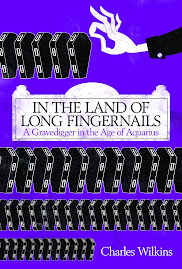
To the right is a reproduction of the cover of the American edition of Charlie Wilkins new book, In the Land of Long Fingernails. Scroll down for the Canadian cover. An excerpt is forthcoming as well.
Giller Winner
Bravo Joseph Boyden, the 2008 winner of the Giller. His novel, Through Black Spruce, would be a good choice for a Christmas present. Other Christmas picks upcoming.
Thursday, November 6, 2008
Da Buzz
At the International Festival of Authors held last week in Toronto, the buzz surrounded a new series of biographies. Called Extraordinary Canadians and published by Penguin, the series is edited by John Ralston Saul. The 18 books will be written by some of Canada's top writers. At the festival I heard John Ralston Saul give an overview of the project, Charlotte Gray discuss Nellie McClung, Rudy Wiebe describe the importance of Big Bear, Lewis deSoto praise Emily Carr and Andrew Cohen outline the achievements of Mike Pearson.
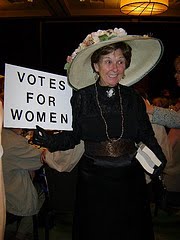
At the round table discussion, Rudy Wiebe attributed Canadian greatness to the struggle for existence in a tough land but he was contradicted by Cohen who said Mike Pearson was an urbanite through and through who had little if any connection to the Canadian landscape. Charlotte Gray was interesting on McClung. She said when she first came from Canada from the British Isles she found Canadian women more self confident and more assured of their place in society than British women. She attributed this to women like Nellie and her cohorts who fought for the vote and for the right to be considered persons.
Below is a list of the books and their authors
Lord Beaverbrook -David Adams Richards
Emily Carr -Lewis deSoto
Nellie McClung -Charlotte Gray
Big Bear -Rudy Wiebe
Pierre Trudeau -Nino Ricci
Lester B. Pearson -Andrew Cohen
Norman Bethune -Adrienne Clarkson
Stephen Leacock -Margaret MacMillan
Mordecai Richler -M.G. Vassanji
Glenn Gould -Mark Kingwell
Riel & Dumont -Joseph Boyden
L.M. Montgomery -Jane Urquhart
LaFontaine & Baldwin -John Ralston Saul
Marshall McLuhan -Douglas Coupland
Tommy Douglas -Vincent Lam
René Levesque -Daniel Poliquin
Wilfrid Laurier -André Pratte
At the round table discussion, Rudy Wiebe attributed Canadian greatness to the struggle for existence in a tough land but he was contradicted by Cohen who said Mike Pearson was an urbanite through and through who had little if any connection to the Canadian landscape. Charlotte Gray was interesting on McClung. She said when she first came from Canada from the British Isles she found Canadian women more self confident and more assured of their place in society than British women. She attributed this to women like Nellie and her cohorts who fought for the vote and for the right to be considered persons.
Below is a list of the books and their authors
Lord Beaverbrook -David Adams Richards
Emily Carr -Lewis deSoto
Nellie McClung -Charlotte Gray
Big Bear -Rudy Wiebe
Pierre Trudeau -Nino Ricci
Lester B. Pearson -Andrew Cohen
Norman Bethune -Adrienne Clarkson
Stephen Leacock -Margaret MacMillan
Mordecai Richler -M.G. Vassanji
Glenn Gould -Mark Kingwell
Riel & Dumont -Joseph Boyden
L.M. Montgomery -Jane Urquhart
LaFontaine & Baldwin -John Ralston Saul
Marshall McLuhan -Douglas Coupland
Tommy Douglas -Vincent Lam
René Levesque -Daniel Poliquin
Wilfrid Laurier -André Pratte
Tuesday, November 4, 2008
Poem by Ulrich Wendt
Clear-cutting
Love is not a subject fit for poetry.
It comes out lies, somebody said, lies
but what with my blood roaring around,
how could I agree at twenty?
Now,
lunch comes when I am in the middle
of my opinion of the government
and I think I will have warm soup or something
nice
at the homemade young Chinese couple’s
and the fellow who works at the department of trees
sits down and that’s all right and love
is not a subject fit for poetry
and I am hardly listening what
with the homemade young Chinese couple’s
apple-pie and my opinion of the government
and it is three thousand acres cut clear
and the wind is blowing the thin soil away
and the pine-needles and all
and love is not a subject fit for poetry
as bit by bit hard stone comes bare.
Love is not a subject fit for poetry.
It comes out lies, somebody said, lies
but what with my blood roaring around,
how could I agree at twenty?
Now,
lunch comes when I am in the middle
of my opinion of the government
and I think I will have warm soup or something
nice
at the homemade young Chinese couple’s
and the fellow who works at the department of trees
sits down and that’s all right and love
is not a subject fit for poetry
and I am hardly listening what
with the homemade young Chinese couple’s
apple-pie and my opinion of the government
and it is three thousand acres cut clear
and the wind is blowing the thin soil away
and the pine-needles and all
and love is not a subject fit for poetry
as bit by bit hard stone comes bare.
Monday, November 3, 2008
INTERNATIONAL FESTIVAL OF AUTHORS
I spent a few days in Toronto at the International Festival of Authors, a week long sprawl of an event with 200 plus writers and dozens of workshops, spread here and there among the forlorn spaces of two enormous Harbourfront buildings. The Sleeping Giant Writers Festival it ain’t. No informal lunches, coffees or the chance to engage the writers in conversation. In Toronto the writers disappeared after each workshop except when they hung around to sell their books.
I was lucky to run into an old friend, Wayson Choy, looking dapper and healthy. Wayson’s many friends from the Humber School for Writers will be happy to hear he was chosen to receive the Harbourfront Festival Prize, presented to a person who has made a significant contribution to Canadian writing. Wayson’s work as a novelist, memoirist and creative writing teacher as well as his volunteer work with literacy and AIDS garnered him a nice cheque of $10,000 as well as a Waterford Crystal bowl. Rumour has it he will release a new book this spring.
The final evening of the festival featured readings by the five Giller Prize finalists.
Authors and books were:
Joseph Boyden Through Black Spruce
Anthony De Sa Barnacle Love
Marina Endicott Good to a Fault
Rawi Hage Cockroach
Mary Swan The Boys in the Trees
All the books were good but one affected me strongly. This was Boyden’s reading of two excerpts from his novel Through Black Spruce. Two separate sections, one of survival in the bush and the other of survival on the streets of Toronto, were told with such gutsy emotion, such northern power, I could hardly stand it. The writing carried me away.
The local libraries carry cards for you to guess the winner. I know who I am rooting for,
I was lucky to run into an old friend, Wayson Choy, looking dapper and healthy. Wayson’s many friends from the Humber School for Writers will be happy to hear he was chosen to receive the Harbourfront Festival Prize, presented to a person who has made a significant contribution to Canadian writing. Wayson’s work as a novelist, memoirist and creative writing teacher as well as his volunteer work with literacy and AIDS garnered him a nice cheque of $10,000 as well as a Waterford Crystal bowl. Rumour has it he will release a new book this spring.
The final evening of the festival featured readings by the five Giller Prize finalists.
Authors and books were:
Joseph Boyden Through Black Spruce
Anthony De Sa Barnacle Love
Marina Endicott Good to a Fault
Rawi Hage Cockroach
Mary Swan The Boys in the Trees
All the books were good but one affected me strongly. This was Boyden’s reading of two excerpts from his novel Through Black Spruce. Two separate sections, one of survival in the bush and the other of survival on the streets of Toronto, were told with such gutsy emotion, such northern power, I could hardly stand it. The writing carried me away.
The local libraries carry cards for you to guess the winner. I know who I am rooting for,
Subscribe to:
Posts (Atom)














































.JPG)